How old is the trevi fountain — quick answer, timeline & visiting tips

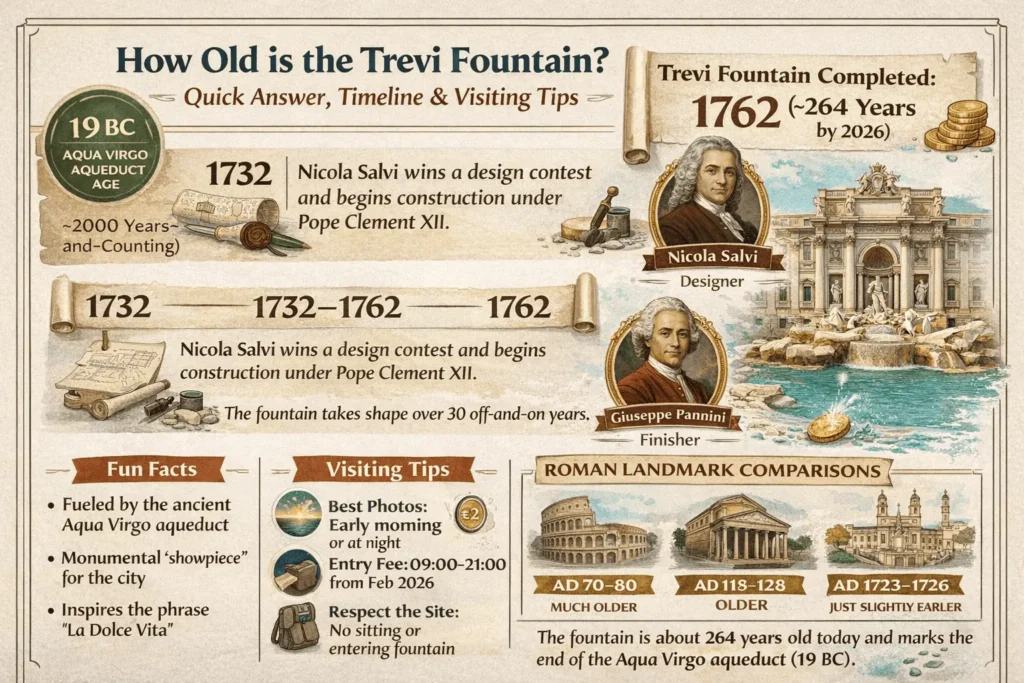
If you’re asking how old is the Trevi Fountain, the simple answer is: the fountain you see today was completed in 1762, which makes it about 264 years old as of 2026. It was designed by Nicola Salvi and finished by Giuseppe Pannini. The fountain also marks the end of the ancient Aqua Virgo aqueduct, which dates back to 19 BC—so the water story behind it is over two millennia old.
Why this age matters (and why Rome built it)
The Trevi Fountain isn’t “just” a pretty Baroque façade. Rome wanted a public showpiece that would celebrate clean water flowing into the city and, at the same time, project the capital city’s power and taste. That’s why popes sponsored a monumental mostra—a theatrical display at the very end of an aqueduct. The choice of the Aqua Virgo was no accident: it had delivered water since the days of Agrippa, and it still does today. In short: the fountain’s age (1762) tells you when the monument was finished; the aqueduct’s age (19 BC) tells you how deep Rome’s water story runs.
A clear timeline you can remember
- 1732: A design competition is held; Nicola Salvi wins and construction begins under Pope Clement XII.
- 1732–1762: Work continues for three decades (on and off) as the massive travertine scene takes shape against Palazzo Poli.
- 1762: Giuseppe Pannini (Pannini/Pannini) oversees completion; the Trevi Fountain is inaugurated. That’s the date behind “how old is the Trevi Fountain.”
Mini-takeaway: From start to finish, the build spanned about 30 years—long for a fountain, but fitting for the bold vision.
What exactly makes the Trevi feel timeless?
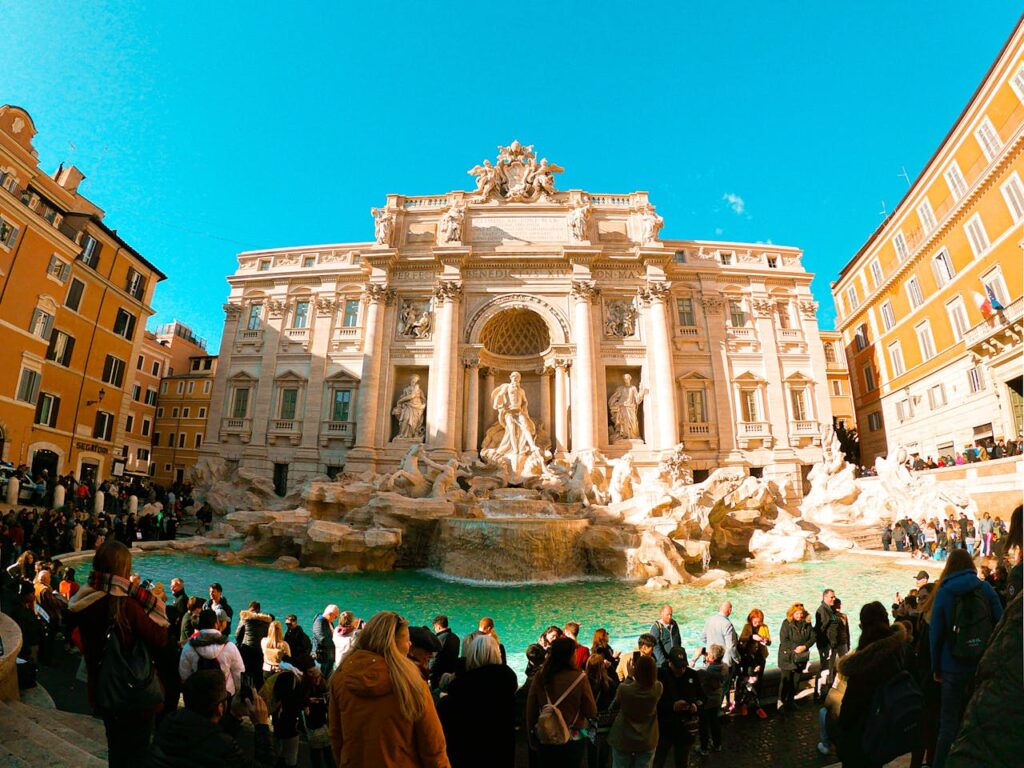
Walk up Via delle Muratte and the street suddenly opens—rock cliffs, Oceanus, tritons, sea horses, and the roar of water. The Trevi is late-Baroque theater: a moving stage where the city is the audience. You feel the age (1762), but the design still reads as fresh because it’s telling a simple story—abundance and health brought by water—that never gets old.
How long did it take to build the Trevi Fountain?
From the 1732 commission to the 1762 inauguration, about 30 years. That span included financing hurdles, supply issues, and the sheer labor of carving an entire cliff of travertine into sculptures and reliefs. If you’re comparing: yes, a generation grew up while it was being built. That’s part of why “wow, it’s that old?” lands differently once you’re standing there.
Where does the water come from—and why does that add centuries to the story?
Answering how old is the Trevi Fountain isn’t only about 1762. The fountain is the terminal display of the Aqua Virgo aqueduct (Acqua Vergine), running since 19 BC. Picture that: engineering from Ancient Rome feeding a Baroque fountain in modern Rome. When you watch the water pour over the rocks, you’re seeing a living connection to late antiquity, not a closed museum piece.
Read the fountain like a local: what to notice
- Oceanus (often called Neptune) in the center, steering a shell chariot.
- Horses (hippocamps): one calm, one wild—water’s dual nature.
- Side figures: Abundance and Salubrity (health).
- Reliefs above: the Aqua Virgo origin story.
All these elements make the 1762 completion date more than a number—they show you what Rome wanted to say in stone and water.
“La Dolce Vita” and modern fame
If you’ve seen La Dolce Vita (1960), you’ve seen the Trevi in global pop culture. That cinematic moment turned the already beloved “La Dolce Vita fountain” into a worldwide icon. The film didn’t change the fountain’s age, of course, but it changed how millions feel about it: daring, romantic, a little larger-than-life. (Please don’t step in—fines are real.)
How old is the Trevi Fountain compared to other Rome sights?
- Colosseum: AD 70–80 (so much older than the Trevi).
- Pantheon’s current dome: AD 118–128 (older).
- Spanish Steps: 1723–1726 (slightly earlier than Trevi construction).
Knowing this helps set the Trevi’s 1762 age in context: it’s younger than Ancient Rome’s icons but older than most 19th–20th century city features.
A short, human story (so the age sticks)
Picture a traveler arriving in 1762. For thirty years, they’ve heard the city gossip: “Will Salvi’s fountain ever be finished?” Finally, scaffolding drops. Water thunders. People crowd the piazza. A grandmother tells her grandson, “Remember this day.” When you ask how old is the Trevi Fountain, you’re counting from that moment—the day real Romans finally saw it unleashed.
Planning your visit (age-proof tips)
- Best time for photos: Early morning (soft light, fewer crowds) or late evening when the sculptures are beautifully lit.
- Respect the site: No sitting on the ledge, no feet in the water, and keep bags zipped—crowded areas attract pickpockets.
- Stand back and scan: Read the whole stage from left to right; you’ll catch details most people miss.
- If it looks “new”: The fountain undergoes periodic cleaning and maintenance to protect the 18th-century stonework. That’s part of how Rome keeps a 1762 monument looking dramatic in 2026.
Deep-dive: what the inscriptions tell you about its age
Look above the central arch and frieze: papal inscriptions credit the sponsors and phases of work. They’re not random Latin; they’re date clues set in stone that confirm the 18th-century timeline you’re reading here. Knowing to look up turns a quick selfie stop into a real conversation with the monument.
FAQs
How old is the Trevi Fountain right now?
Completed in 1762; ~264 years old in 2026 (counting from completion).
Who designed the fountain?
Nicola Salvi won the 1732 competition; Giuseppe Pannini completed the project in 1762.
Is the water ancient too?
The Aqua Virgo aqueduct has delivered water since 19 BC, continuously into the modern Acqua Vergine system. The display you see is 18th century; the supply story is ancient.
Why is the Trevi Fountain so famous?
Baroque theater, central Rome location, the coin-toss legend, and starring roles in cinema created a perfect storm of popularity.
What does “Trevi” mean?
Likely from tre vie (“three roads”): the fountain stands where three streets once met at the aqueduct’s end—another nod to Rome’s habit of turning infrastructure into art. (This is a commonly accepted explanation in local histories.)
How long did it take to build the Trevi Fountain?
Roughly 30 years (1732–1762). That’s why asking how old is the Trevi Fountain also opens a conversation about how long grand projects can take.
Can I visit at night?
The square is open and the fountain is illuminated after dark. Expect crowds—but also great photos and a different mood.
Where is it exactly?
In the Trevi district, backing onto Palazzo Poli, a short walk from the Spanish Steps and Via del Corso.
Summary
How old is the Trevi Fountain? The monument was completed in 1762 (about 264 years old today), designed by Nicola Salvi and finished by Giuseppe Pannini. It is the theatrical endpoint of the ancient Aqua Virgo aqueduct (19 BC), which is why you’re seeing an 18th-century façade powered by a truly ancient water system. Toss a coin if you like—tradition says it ensures your return to Rome.