How to get from rome to sorrento — routes, times & zero-stress steps
The quick answer you came for
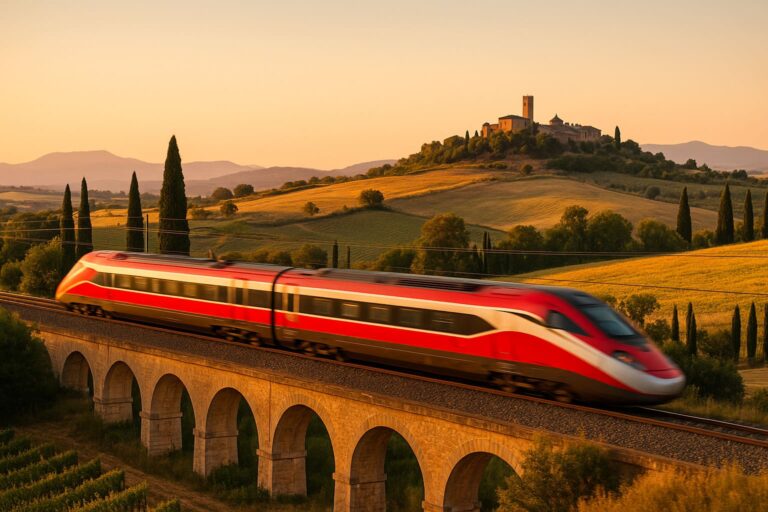
You’re asking how to get from Rome to Sorrento because you want the route that actually works on the ground. The simplest plan for most travelers is: high-speed train from Roma Termini to Napoli Centrale (just over 1 hour), then the local train to Sorrento. It’s center-to-center, frequent, and easy to follow. For the backbone leg, use Italy’s Frecciarossa high-speed network (up to 300 km/h, city-center to city-center).
If you want comfier seats and space for luggage on the Napoli → Sorrento hop, look at Campania Express, the tourist express on the same line that runs to Sorrento. You can check dates and buy tickets directly from the operator.
What “distance” really means (km, miles & time)
On a map, Rome → Sorrento is roughly 255–275 km (≈160–170 miles) by road depending on your exact route. By train, you’ll think in time instead of kilometers. With a smart connection in Naples, the full journey is usually about 2.5–3 hours door-to-door: ~1h05–1h15 Rome→Naples on high-speed rails, then ~1h on the local line plus a short platform change.
Takeaway: distance is nice to know, but time and transfers make or break your day. The city-center rail spine is why this trip feels simple.
Route #1: High-speed train + local train (the no-stress default)
Step 1 — Rome to Naples (high-speed)
- Board: Roma Termini (or Roma Tiburtina)
- Arrive: Napoli Centrale
- Why it’s easy: high frequency; city-center to city-center; modern trains with assigned seats, power outlets, and luggage racks.
- How fast: the Frecciarossa network advertises up to 300 km/h and frequent connections right into major city centers, which is why this leg routinely clocks just over an hour.
Step 2 — Naples to Sorrento (local line)
From the concourse at Napoli Centrale, follow signs down to Napoli Piazza Garibaldi (connected lower-level station).
You now have two choices:
- Circumvesuviana (standard local train): frequent, cheap, simple.
- Campania Express (tourist express on the same tracks): reserved seats and convenient online booking; fewer stops focused on visitor hubs (e.g., Pompei Scavi, Ercolano). Buy directly from the operator’s booking page.
Final stop: Sorrento (EAV station in the town center). From here you can walk to many hotels or take a short taxi/bus.
Timing tip: plan 15–20 minutes to change platforms in Naples and top up water/coffee before the coastal ride.
Route #2: High-speed train + ferry (scenic in season)
If you prefer sea views or your hotel sits near Marina Piccola in Sorrento, consider: Rome → Naples (Molo Beverello) via a short taxi from Napoli Centrale, then hydrofoil to Sorrento. This is dazzling on a calm day, but the ferry is seasonal and weather-dependent. It’s lovely in late spring–early autumn; in winter, services thin out. (If you choose this route, buy your Naples–Sorrento boat ticket locally on the day or from the operator you prefer.)
When to pick it: light luggage, good weather, and you love a scenic arrival.
Route #3: Direct coach or shared shuttle (budget-first, time-last)
Direct buses/shuttles can run between Rome and Sorrento, often from Rome’s bus terminals or Fiumicino. They can be cheap, but they’re slower and depend on traffic on the A1/A3 and SS145. If time matters, rail still wins; if price matters most and you’re hotel-to-hotel with one seat the whole way, a shuttle can be fine—just check current timetables carefully.
Route #4: Private driver or rental car (flexible, not fastest)
Driving turns the trip into a road-trip: you’ll see the countryside, stop where you like (e.g., Caserta Palace, Pompeii), and arrive at your hotel door. The driving distance is in the ~260 km range, typically 2.5–4 hours depending on traffic. The trade-offs: tolls, fuel, parking, and ZTL rules (limited-traffic zones) near historic centers. If you only need Rome → Sorrento, rails are calmer; if you’re doing a multi-stop itinerary (Pompeii + vineyards + Amalfi), driving or a private transfer can be worth it.
Stations & wayfinding (so you never feel lost)
- Roma Termini: big boards list your train and binario (platform). They post close to departure; stand near the center to move quickly when it appears.
- Napoli Centrale → Piazza Garibaldi: follow the pictograms for the lower-level local trains; ticket counters and machines are signed.
- Sorrento: the EAV station is central. Buses for Positano/Amalfi (SITA) and marina steps are nearby; taxis queue at the exit.
Safety note: this is a normal big-city journey. Keep your phone and wallet zipped on escalators and platforms and you’ll be fine.
Tickets without stress (and where to actually buy)
High-speed Rome ↔ Naples
Buy on the operator’s official site so you can pick exact trains, seat types, and see live prices and promos. Frecciarossa’s page explains the high-speed network, frequent city-center connections, and top speed (handy to understand why this leg is fast).
Naples ↔ Sorrento (local line)
For the tourist express on the same route, use the Campania Express booking engine to select your date, train, and seats; this avoids crowding and gives space for luggage. If you prefer the standard local train, buy at the station kiosks or machines in Piazza Garibaldi.
Small tips that save minutes
- Arrive 10–15 minutes early for local trains; platforms can be busy.
- Keep small cash or a contactless card handy for turnstiles on the local network.
- If you have heavy luggage or kids, Campania Express is worth it for the reserved seats.
Can you do Rome → Sorrento as a day trip?
Yes—if you keep it simple. The smoothest pattern is:
- Early high-speed Rome → Naples
- Immediate local train or ferry → Sorrento
- Lunch + a relaxed stroll (Marina Grande, lemon gardens, viewpoint at Villa Comunale)
- Mid-afternoon return via the same route
You’ll get a Sorrento sampler without rushing. If you want to add Pompeii the same day, do Pompeii in the morning (get off at Pompei Scavi), then continue to Sorrento for a sunset walk and dinner, and sleep on the coast.
With kids, big luggage, or mobility needs
- Kids: choose Campania Express for guaranteed seats on the Naples–Sorrento leg. Keep snacks and a small activity bag for the platform wait.
- Luggage: rollable suitcases are fine on both legs; put them on end-racks and keep valuables with you.
- Mobility: book Frecciarossa seats near carriage ends for shorter walks; in Naples, use elevators down to Piazza Garibaldi; in Sorrento, call your hotel to confirm step-free routes from the station.
Money vs time: which route should you choose?
- Fastest city-center to city-center: high-speed train + local train.
- Most scenic in season: train + ferry (Naples Molo Beverello → Sorrento Marina Piccola).
- Cheapest point-to-point: coach/shuttle (but longest day).
- Most flexible for vineyards/ruins detours: private driver / rental car.
- Easiest with strollers & big bags: Campania Express on the Naples–Sorrento hop.
Sample itineraries you can copy
A) Classic, no-rush transfer (≈2.5–3h)
Morning Frecciarossa Termini → Napoli Centrale → quick coffee → Campania Express (or local) to Sorrento → check-in and lunch in the old town.
B) Rome → Pompeii → Sorrento (one travel day)
Frecciarossa Termini → Napoli Centrale, down to Piazza Garibaldi, off at Pompei Scavi for 3–4 hours, then continue to Sorrento for dinner and sleep.
C) Scenic arrival (spring–autumn)
Rome → Naples by high-speed → short taxi to Molo Beverello → hydrofoil to Sorrento → walk or taxi up to your hotel.
People also ask (quick, honest answers)
Is there a direct train from Rome to Sorrento?
No. You connect in Naples: high-speed Rome → Napoli Centrale, then local rail to Sorrento (or the Campania Express tourist service).
How long does it take from Rome to Sorrento by train?
Typically about 2.5–3 hours total, including the platform change in Naples. The fast leg is thanks to Italy’s Frecciarossa high-speed network.
What’s the driving distance from Rome to Sorrento?
Roughly 255–275 km (160–170 miles) depending on your route; plan 2.5–4 hours plus tolls and parking.
Which station should I use in Rome and Sorrento?
Roma Termini in Rome and Sorrento (EAV) on arrival; in Naples you change at Piazza Garibaldi beneath Napoli Centrale.
Is the ferry a good idea?
Yes—in season and calm seas. It’s scenic but weather-dependent; keep a rail backup if boats are suspended.
A quick story: why the “train + local train” rhythm works
You roll your carry-on into Termini after breakfast. The Frecciarossa slides south; you’re in Napoli Centrale about an hour later. Down the escalators, you grab a spot on the Campania Express and watch Vesuvius drift by. An hour later you’re stepping into Sorrento, grabbing a lemon-granita, and walking five minutes to your hotel. No highway jams, no luggage roulette, and your room is ready before lunch.
FAQs (fast & useful)
Do I need to book the local train in advance?
For the standard local line, you can buy at the station. For Campania Express, advance booking guarantees your seats and timing.
Which side of the train has the best views to Sorrento?
Both—Vesuvius on one side, sea glimpses on the other. Grab a window if you can.
Can I use Sorrento as a base for the Amalfi Coast?
Yes. It’s well connected to Positano/Amalfi by bus/boats and has more hotel choices at friendlier prices.
Are there food and toilets on the trains?
On the high-speed leg, yes (café-bar and lavatories). On the local leg, services are basic; plan accordingly.
Wrap-up
How to get from Rome to Sorrento: take a high-speed Frecciarossa from Roma Termini to Napoli Centrale (just over 1 hour, city-center to city-center), then the local train to Sorrento—or the Campania Express for reserved seats and easier luggage space. It’s the most reliable, no-stress route; ferries add a scenic option in season, and driving works if you’re turning the trip into a road-trip with stops. Book the backbone rail leg on the official Frecciarossa page, and secure Campania Express seats if you want a calmer Naples→Sorrento ride.