What language did rome speak — a clear guide you can trust
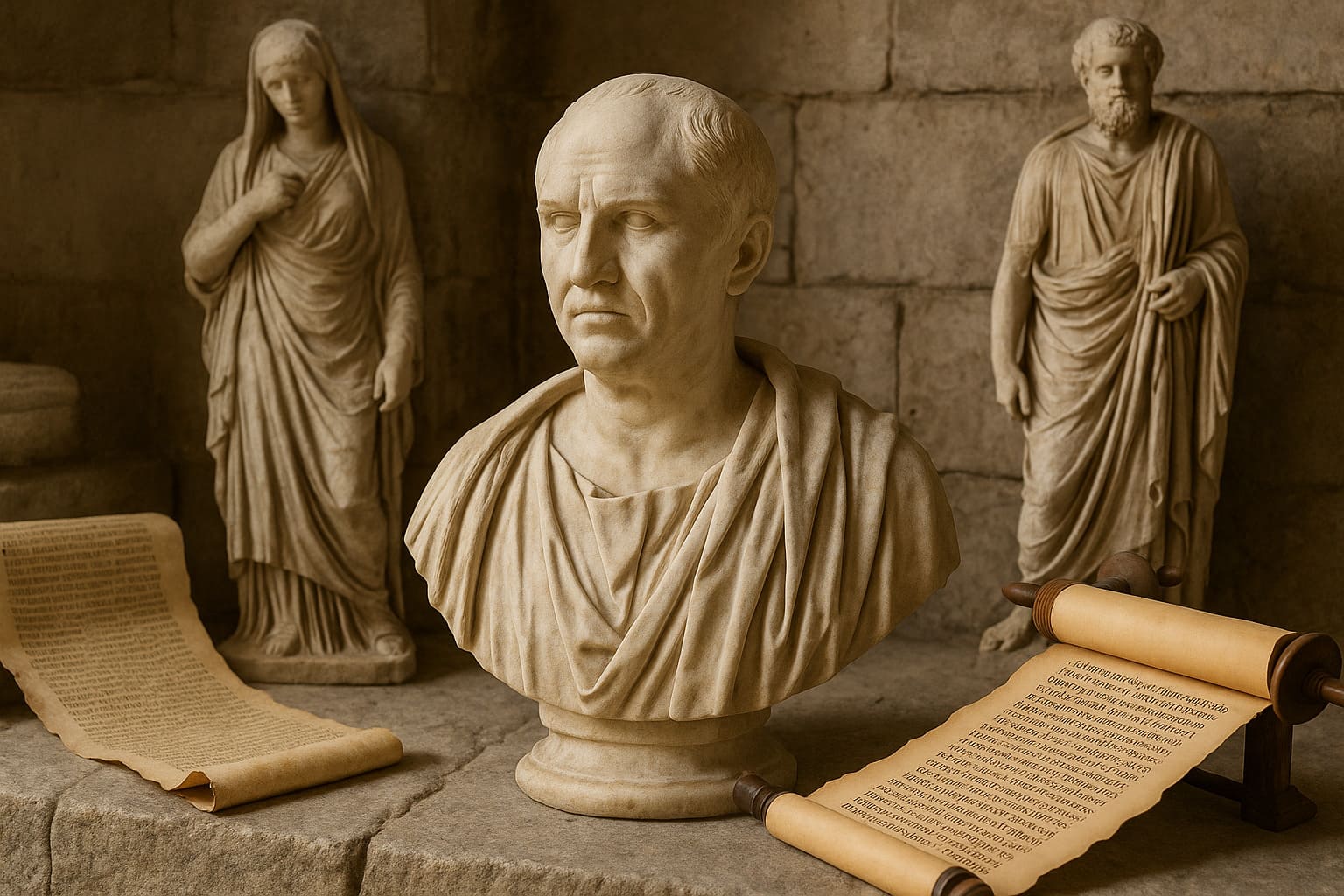
If you’re planning a Rome trip or you just love ancient history, you’ve probably asked yourself “what language did Rome speak?” The short answer is Latin—but the full story is richer. Romans wrote polished Classical Latin, spoke a more relaxed Vulgar Latin on the street, and many elites also knew Greek, especially for philosophy and science. In this guide, you’ll learn what Latin really was, how people used it daily in ancient Rome, why Greek mattered, and how Latin evolved into today’s Romance languages like Italian, Spanish, and French.
The core answer: Latin was Rome’s voice
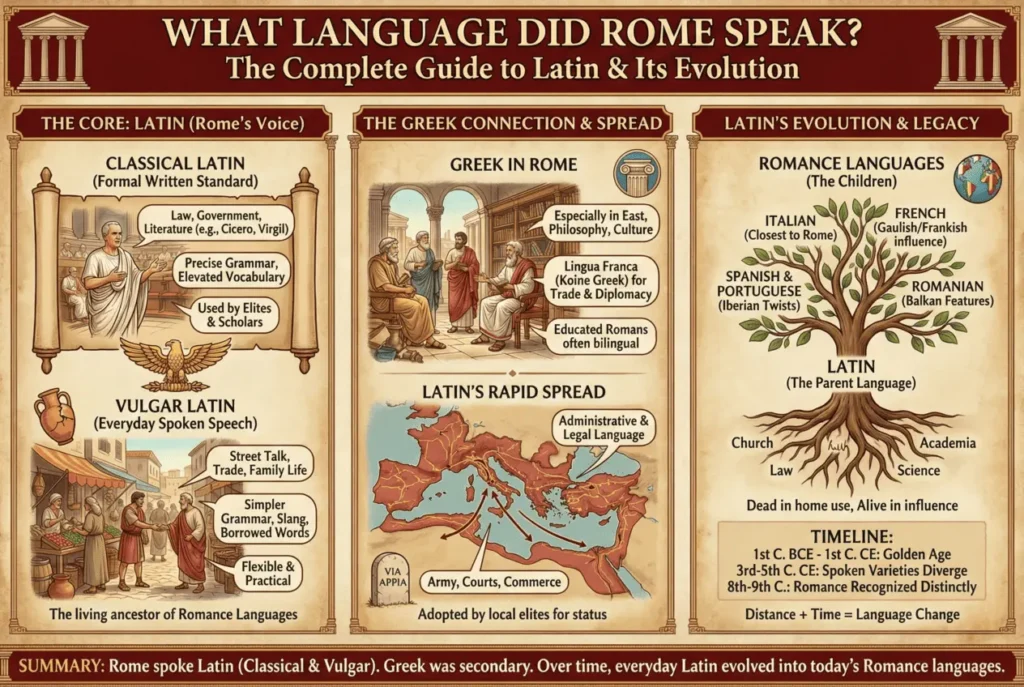
The official Roman language—in law, government, and literature—was Latin. It began in Latium (the region around Rome) and became the glue of the Roman Republic and Empire. When you read speeches by Cicero or poems by Virgil, you’re seeing Classical Latin, a refined written standard used by statesmen, poets, and scholars. Everyday Romans, soldiers, traders, and families mostly spoke Vulgar Latin—simpler grammar, more slang, more borrowed words—because daily talk and market haggling don’t sound like Senate orations.
Latin wasn’t one flavor: Classical vs. Vulgar (spoken) Latin
Think of Classical Latin as formal business attire—precise cases, strict style, elevated vocabulary. Vulgar Latin was your comfortable, lived-in outfit: faster, looser, and practical. Over centuries, small differences in the way people actually spoke across the empire—Gaul, Hispania, Italia, Africa—gradually grew. After Rome’s political unity faded, those spoken varieties kept drifting until they became Romance languages (Italian, Spanish, Portuguese, French, Romanian, and others). That’s why modern Italian feels like a close cousin of ancient Latin.
Where did Latin originate—and why did it spread so fast?
Latin started locally in Latium. Rome’s rise—first in Italy, then across the Mediterranean—made Latin the administrative and legal language wherever Roman power reached. Soldiers founded colonies, officials ran courts, merchants sold goods, and local elites adopted Latin for status and mobility. Inscriptions, milestones, and laws reinforced it. As people shifted to Latin in daily life, Vulgar Latin adapted to local accents and habits—exactly the process that later produced Italian in Rome and Tuscany, French in Gaul, and so on.
“What is Latin?” (and why some call it a “dead language”)
Latin is an Italic language of the Indo-European family. It’s “dead” in the narrow sense that no community speaks Classical Latin at home today. But Latin isn’t gone—it lives on as the root of Romance languages and as a precise written language in law, medicine, science, and the Roman Catholic Church. When you recognize words like video, aqua, forum, campus, or data, you’re seeing Latin’s fingerprints on modern vocabulary.
Did Romans speak Greek too?
Yes—especially in the eastern Mediterranean and in cultural life. After Rome conquered formerly Greek areas, Koine Greek remained the everyday lingua franca from Egypt to Asia Minor. In Rome itself, educated people often read Greek literature and philosophy; some spoke Greek at home. Latin dominated law and administration in the West, while Greek stayed strong in the East. Many Romans were effectively bilingual in elite settings.
Everyday life: how Latin sounded on the street
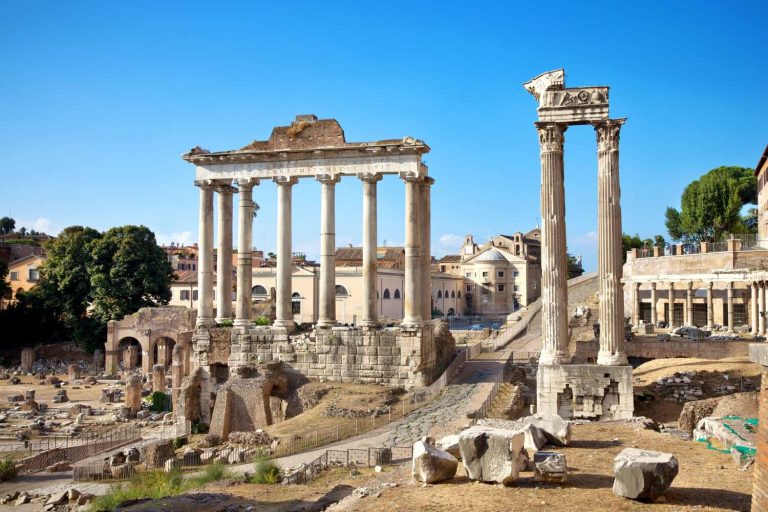
Picture a food market near the Forum. A senator’s inscription nearby is in polished Classical Latin; but vendors haggle in Vulgar Latin:
- Dropping or simplifying case endings to talk faster
- Favoring prepositions over complex inflections
- Borrowing handy words from neighbors and soldiers
That living, flexible speech is the ancestor of modern Italian. It’s also why written Latin from poets can feel different from the Latin scratched into a tavern wall or a soldier’s letter home.
How long did Latin last in Rome?
Latin’s golden literary age (roughly 1st century BCE to 1st century CE) is just one snapshot. As the Western Roman Empire declined, written Latin stayed the language of law, scholarship, and the Church for centuries. Meanwhile, across towns and farms, the spoken tongue kept changing—until people recognized by the 8th–9th centuries that their speech was no longer Classical Latin but something distinct. That’s when the first Romance texts begin to appear.
Why did Latin split into different languages?
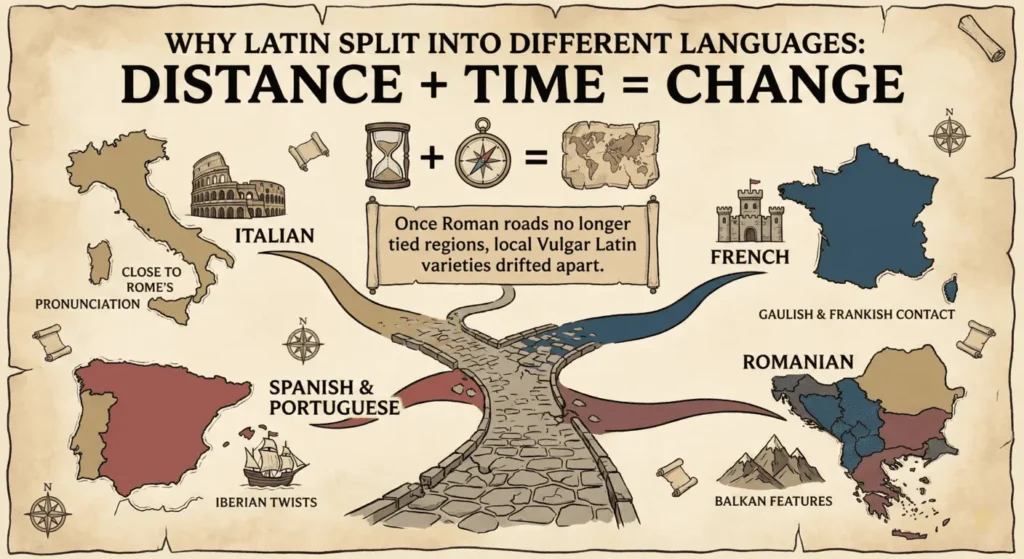
Distance plus time equals change. Once Roman roads no longer tied regions together under the same schools, courts, and army, local Vulgar Latin varieties drifted apart. Mountain valleys, river routes, and new rulers pulled speech in different directions. The result: Italian (close to Rome’s pronunciation), Spanish and Portuguese (with Iberian twists), French (shaped by Gaulish and Frankish contact), Romanian (with Balkan features), and more.
People also ask (quick answers you can use)
Did Rome actually speak Latin every day?
Yes. Officials wrote and spoke Latin for government and law; ordinary people spoke Vulgar Latin—simpler grammar, everyday words, regional accents.
Why is Latin considered “dead” if Italian is alive?
Because the classical standard is no one’s home language now, even though its descendants (Italian, Spanish, French, etc.) are very much alive. Think of Latin as the parent; Romance languages are the kids.
“Roman language” in special places: army, law, and church
- Army: Orders, pay records, and unit names used Latin. Soldiers from different provinces needed a common tongue; Latin did the job.
- Law & administration: Decrees, citizenship papers, and tax records standardized Latin across regions.
- Religion & scholarship: Even after the empire, Latin remained a powerful written language in monasteries, universities, and the Church—shaping Europe’s intellectual life for a millennium.
Greek influence on Latin (and vice versa)
Romans admired Greek culture. Poets and orators borrowed Greek vocabulary and literary forms; in southern Italy (old Magna Graecia), contact ran deep. Conversely, Latin later fed words into many European languages. This two-way traffic explains why ancient literature from Rome and Greece feels connected—and why educated Romans often read Homer as comfortably as Virgil.
Mini-timeline: from village Latin to Europe’s languages
- Early Rome (Latium): Latin spoken by local communities
- Republic & Empire: Latin becomes the administrative and legal language across the West; Greek remains strong in the East
- 3rd–5th c. CE: Spoken Vulgar Latin diverges regionally
- 8th–9th c.: People recognize Romance speech as distinct from Classical Latin
- Middle Ages → today: Latin survives as a scholarly and liturgical language; Romance languages thrive as everyday speech.
A quick story to make it stick
Imagine a Roman trader from Ostia sailing to Marseilles. In the harbor office, he files paperwork in crisp Latin. At the docks, he chats in a more relaxed Vulgar Latin, picking up a Gaulish word or two. Over generations, dockside speech in Gaul slowly shifts—sound by sound, habit by habit—until locals are speaking Old French. Same roots, new branch.
FAQ (save these for your notes)
What language did Rome speak, officially?
Latin. Government, courts, and the army used it throughout the Western Empire.
What language did people speak in ancient Rome at home?
Vulgar Latin—the everyday, spoken variety. It’s the ancestor of today’s Romance languages.
Did Romans ever speak Greek?
Yes. Greek was common in the East and among educated Romans in the capital, especially for philosophy and science.
Why did Latin evolve into Italian, Spanish, French, etc.?
Because spoken Latin differed by region and kept changing after the empire’s political unity ended—classic conditions for language split.
Is Latin totally gone?
No. It survives in the Church, science, law, and the vocabulary of many languages—and as a subject people still learn.
Key takeaways
What language did Rome speak? Latin—with a polished Classical written standard and a widely used Vulgar spoken form. Greek also mattered, especially in the East and in elite culture. Over time, everyday Latin across the empire evolved into the Romance languages we speak today.