
On this page · 8 sections
Yes, Rome is safe to visit for most travellers, including Americans. Violent crime against tourists is rare; the real risks are pickpocketing and scams around busy sights and on public transport. The US State Department rates Italy at Level 2, "Exercise Increased Caution", the same level as France, Spain, Germany and the United Kingdom.
That does not mean you can switch off. Rome is a big, crowded capital that welcomes millions of visitors a year, and professional pickpockets know exactly where to find them. Below you will find what the official travel advisories say in 2026, where thieves work, the scams to recognise, how to take a safe taxi and what to do if something goes wrong.
How Safe Is Rome, Really?
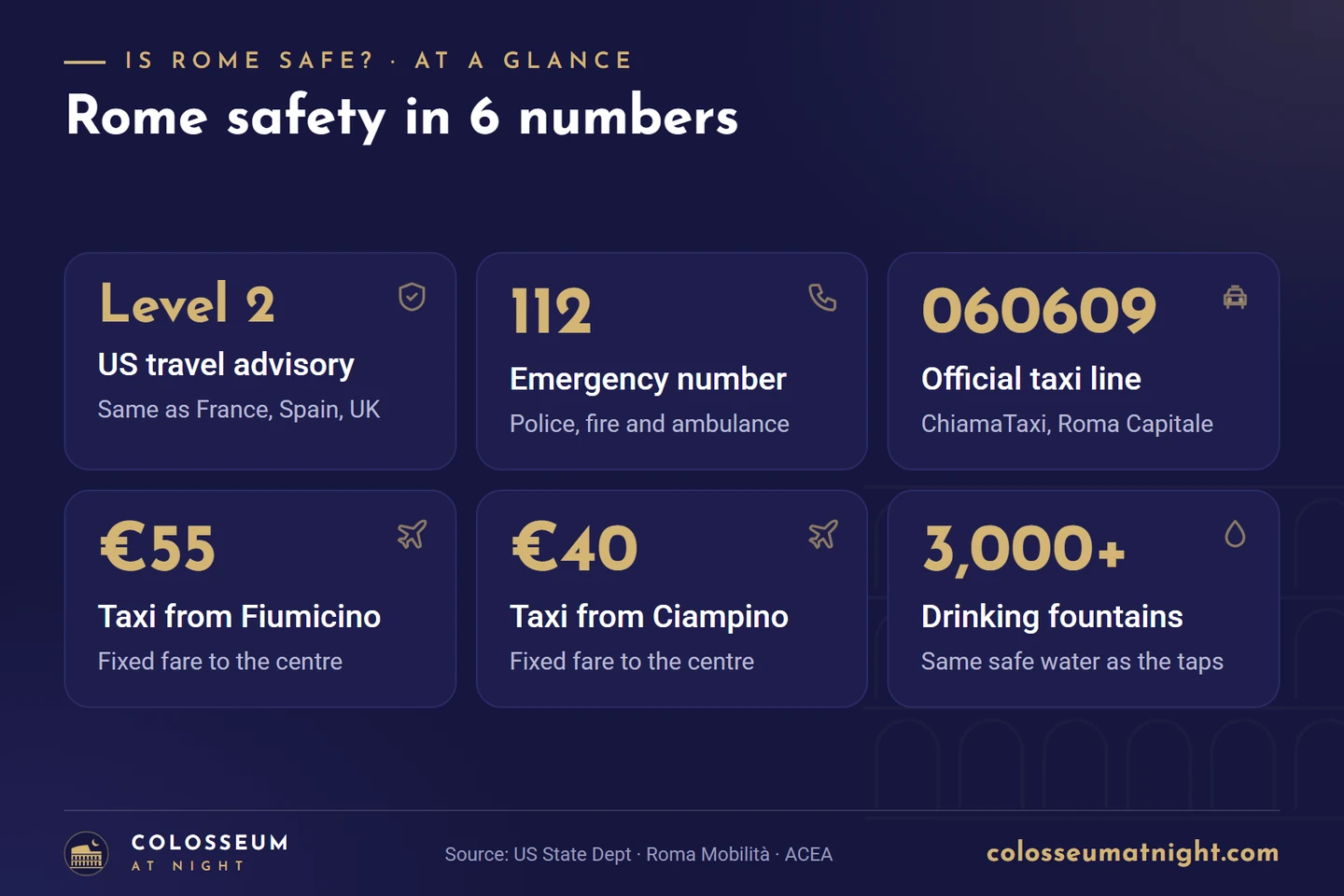
The US travel advisory for Italy, last updated on 10 September 2026, is Level 2, "Exercise Increased Caution". The main reason is the risk of terrorism, which applies across much of Europe, while Portugal, Greece and Austria, for example, are at Level 1. The State Department also notes that petty crime such as purse snatching and pickpocketing is common at tourist sites and on public transport, while violent crime is rare.
The British government gives similar advice. Its Italy travel advice calls crime levels "generally low", but warns that bag-snatching and pickpocketing are more common in city centres and at major attractions.
Italian figures tell the same story. In the 2026 crime index of the newspaper Il Sole 24 Ore, the province of Rome ranks third in Italy for reported crimes per 100,000 residents, but reports fell by 5.3% in 2025. Part of the high rate comes from the millions of visitors who are counted as victims but not as residents.
Is Rome Safe for American Tourists?
Yes. American visitors face the same small risks as everyone else. A few extra steps make sense:
- Enrol in STEP. , the State Department's Smart Traveler Enrollment Program, so the embassy can reach you in an emergency.
- Save the US Embassy's number. , +39 06 46741. The embassy in Rome publishes alerts about demonstrations and strikes, as it did several times in October 2026.
- Check for strikes. before travel days. General strikes can stop taxis, buses and the metro for a day. Italy's transport ministry publishes an official strike calendar online.
Where Pickpockets Work in Rome
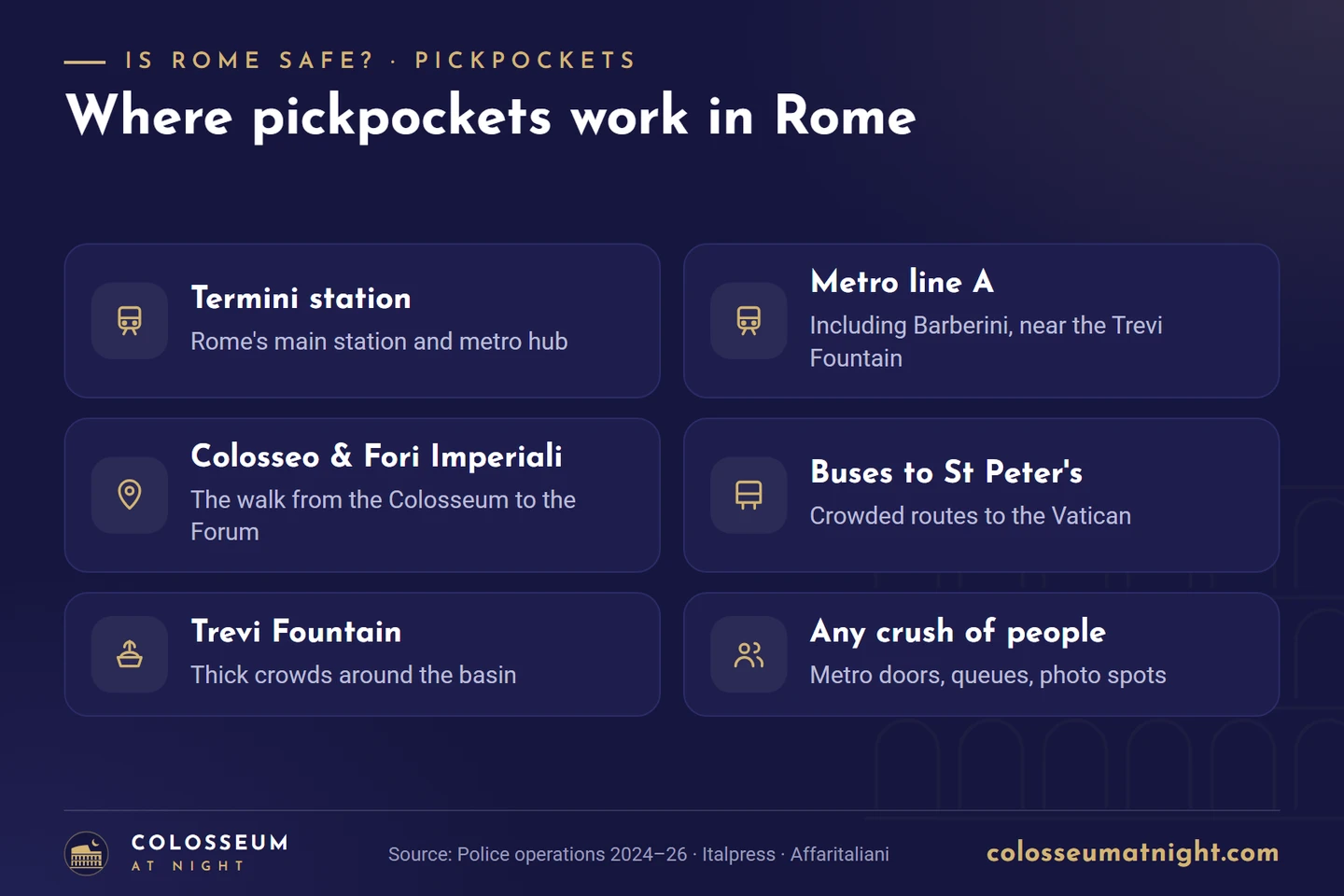
Pickpockets in Rome are quick and often hard to spot. Police operations in 2024–2026 caught thieves at Termini station, at the Colosseo metro stop and along Via dei Fori Imperiali, on Via Cavour, on buses heading to St Peter's, on metro line A (including Barberini station, near the Trevi Fountain) and around the Trevi Fountain itself.
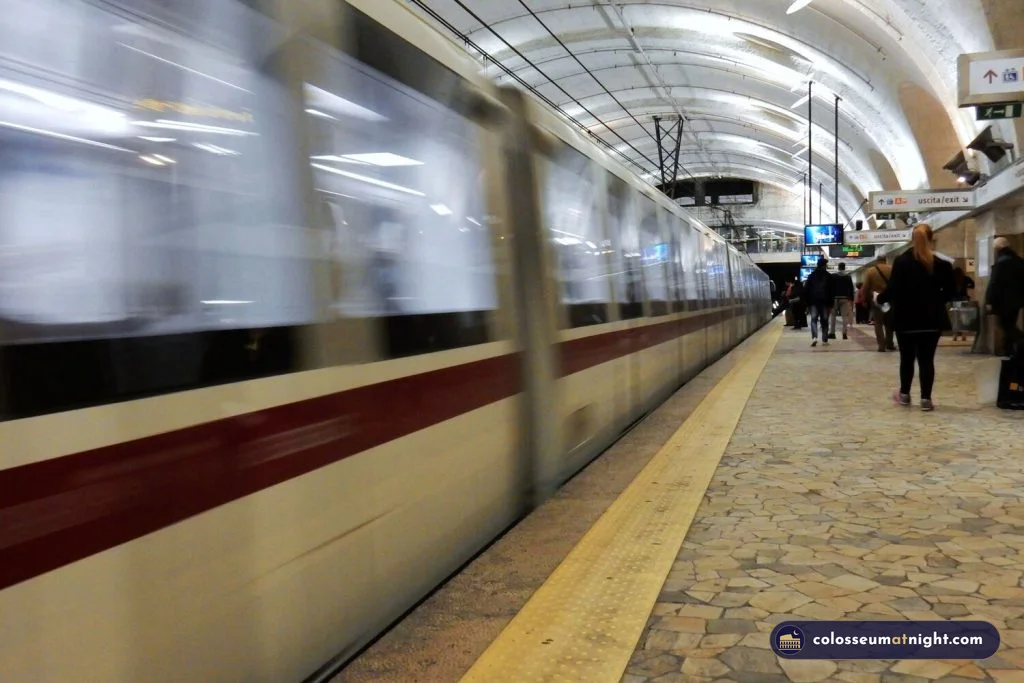
Most thefts happen in a crush: as metro doors open, on a packed bus or in the crowd around a fountain. To stay safe:
- Wear your bag across your body and in front of you, zipped.
- Keep your phone and wallet out of back pockets.
- Be extra alert when someone bumps into you, asks for directions or "helps" you with a ticket machine.
- On the metro, step back from the doors and let the first crush pass.
6 Common Scams in Rome (and How to Avoid Them)
Most scams in Rome rely on surprise and politeness. If someone approaches you uninvited with a gift, a favour or an offer, a firm "no, grazie" and walking on is almost always the right answer.
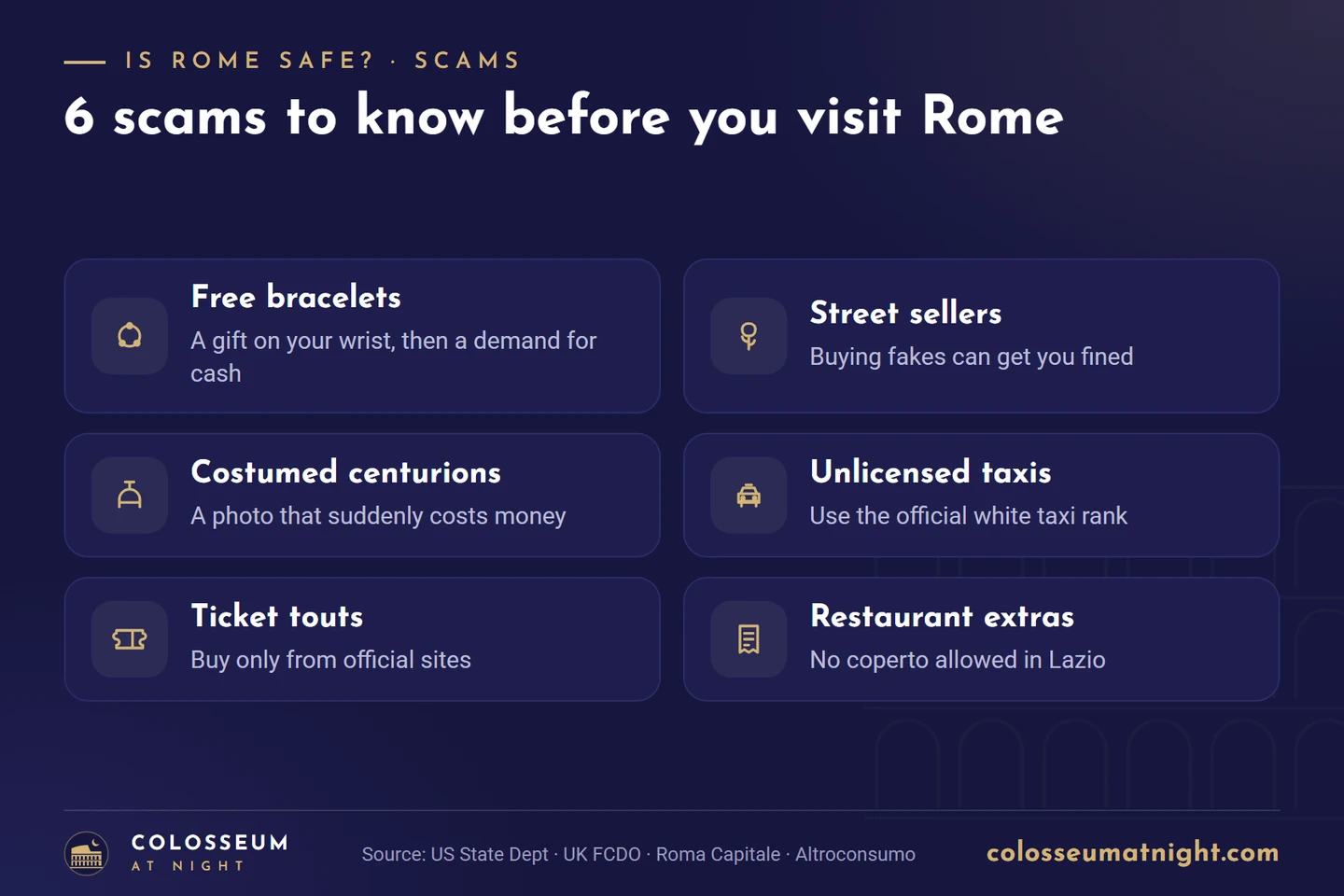
- "Free" bracelets and gifts. A friendly stranger ties a bracelet on your wrist or hands you a "gift", then asks for money. In 2022 two tourists at the Spanish Steps were robbed after exactly this kind of approach.
- Street sellers and fake goods. Buying from unlicensed street traders, including counterfeit designer goods, can get you fined in Italy, as both the US and UK governments warn.
- Costumed centurions. Men dressed as Roman soldiers offer a photo near the Colosseum, then demand money. Rome's 2019 urban police regulations stopped them from working in its heritage areas, but some still try; in 2022 three were arrested for asking up to €500 for selfies.
- Unlicensed taxis. At the airports, drivers may approach you inside the terminal and offer a ride. Rome's airport operator warns against them: walk to the official taxi rank instead.
- Ticket touts. Near the Colosseum and the Vatican, touts sell "skip-the-line" or resold tickets. Colosseum tickets carry the visitor's name, resellers have charged €33 or more for an €18 ticket, and touts who are caught face a fine. Buy only from the official sites or a reputable tour company.
- Restaurant extras. According to the Italian consumer association Altroconsumo, a coperto (cover charge per person) is not allowed in Lazio, the region that includes Rome. Other service charges are legal only if they are shown on the menu, so read it before you order. Our guide to tipping in Rome explains what is normal.
One more tip from the US State Department: use ATMs inside banks, cover the keypad, and avoid any machine with a card slot that looks loose.
Taxis and Getting Around Safely
Official Rome taxis are white, with a "TAXI" sign on the roof and the Roma Capitale emblem and licence number on the front doors; the number is repeated inside the car. Make sure the meter is running and ask for a receipt. According to Roma Mobilità, the city's mobility agency, these fixed fares apply per car, including luggage and extras:
| Taxi route | Fixed fare |
|---|---|
| Fiumicino airport to anywhere inside the Aurelian Walls | €55 |
| Ciampino airport to anywhere inside the Aurelian Walls | €40 |
| Fiumicino to Ciampino | €55 |
The fixed fares apply only to direct trips. You can book an official taxi through the city's ChiamaTaxi service on 060609 or its app. Women travelling alone at night get a 15% discount on metered fares between 22:00 and 06:00, though not on the fixed airport fares. More details are in our guides on how to get a taxi in Rome and whether there is Uber in Rome.
On foot, the biggest everyday danger is traffic. Scooters can appear from nowhere, so look both ways even when the pedestrian light is green. If you rent an e-scooter, a helmet is compulsory and riders must be at least 14.
Is Rome Safe at Night?
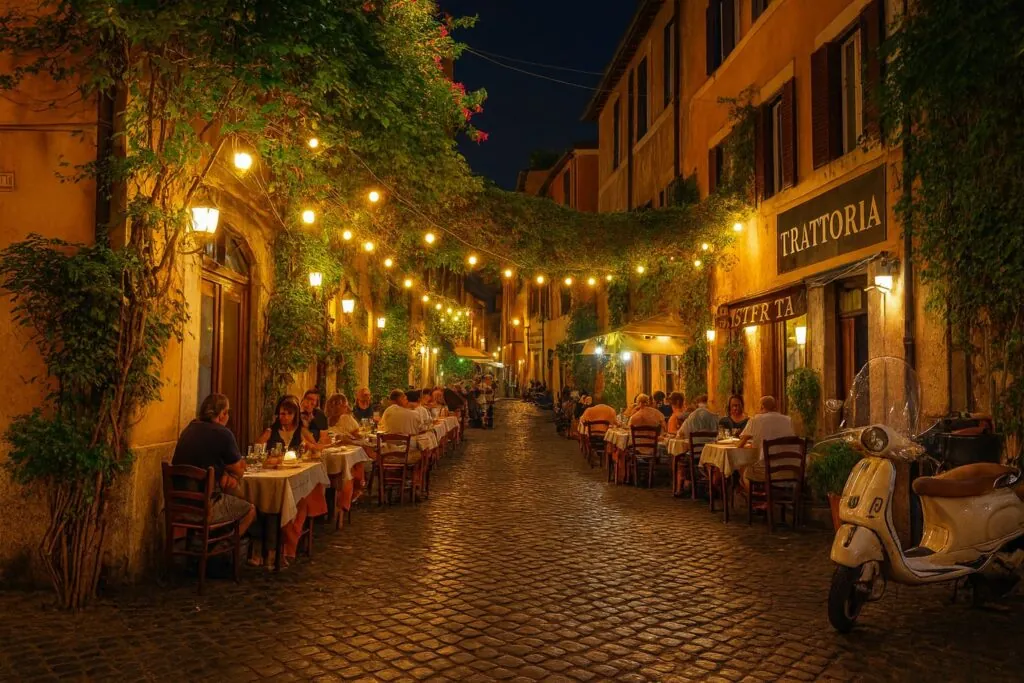
The historic centre stays lively late into the evening, and areas like Trastevere, Campo de' Fiori and the streets around the Pantheon stay busy until late. Use the same common sense you would in any big city: stick to busy, well-lit streets, keep an eye on your drink and take an official taxi home if you are tired. We cover evenings in detail in is Rome safe at night.
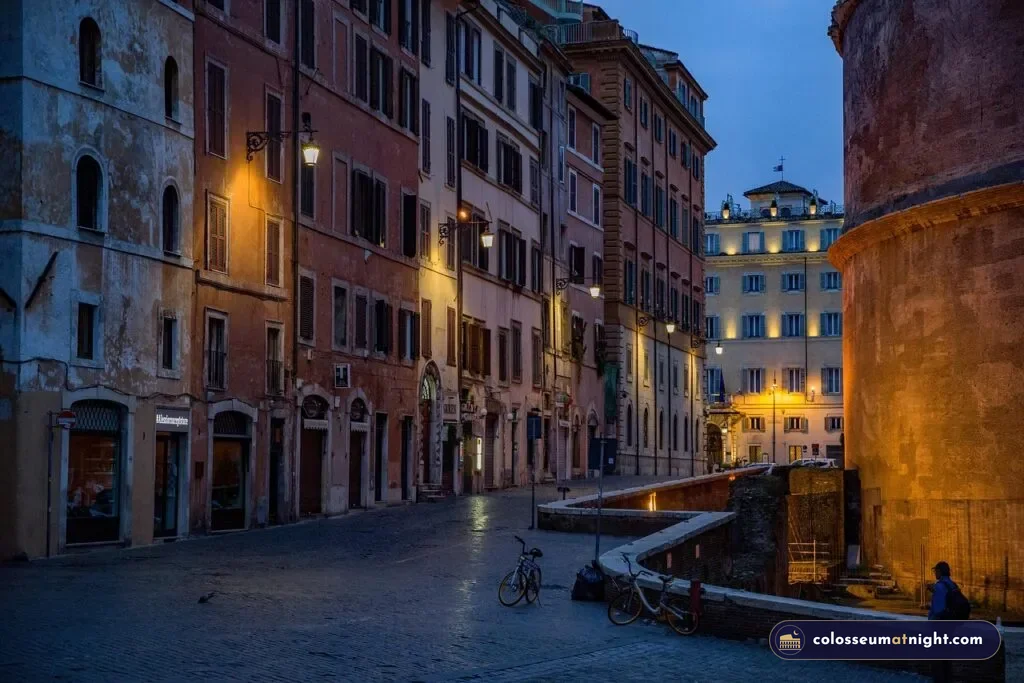
If you would like to see the monuments after dark without worrying about getting around, a guided Colosseum night tour is one of the most relaxed ways to do it.
Other Things That Can Spoil Your Trip
- Summer heat.. Italy's Health Ministry issues heat warnings from late May to late September, and on 6 August 2026 every monitored city, Rome included, was on the highest alert. Carry water: the city's street fountains, the nasoni, deliver the same checked drinking water as the taps, according to the water company ACEA. Read more in can you drink tap water in Rome.
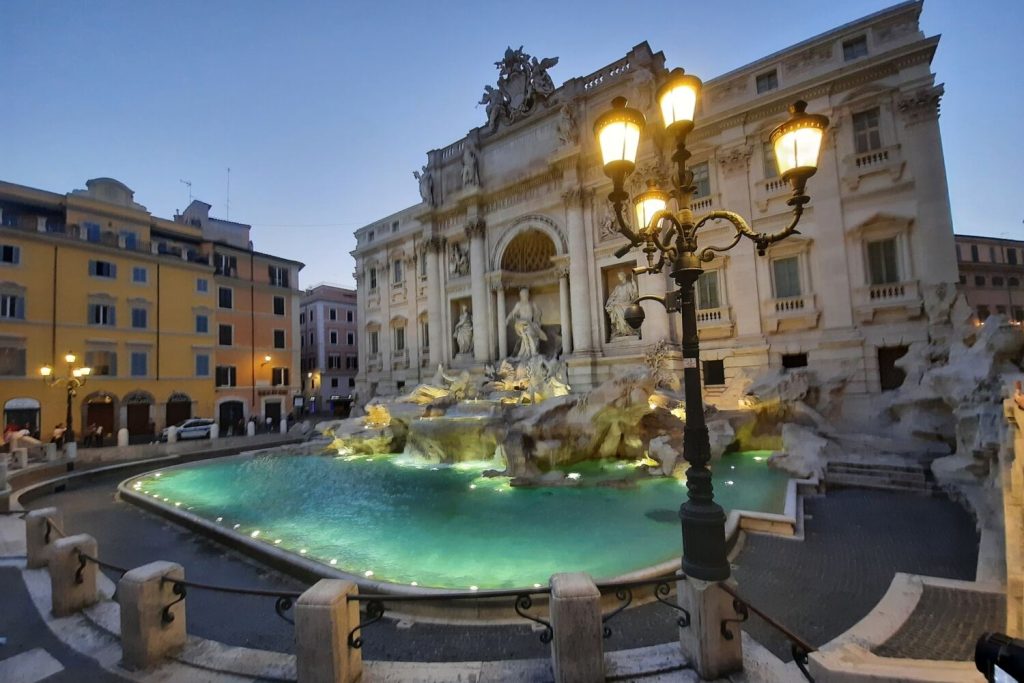
- Crowds at the Trevi Fountain.. Since 2 February 2026, non-residents pay €2 to enter the area next to the basin during its opening hours, and only card payments are accepted at the gate. See why the Trevi Fountain is so famous before you go.
- Demonstrations.. Marches happen regularly in central Rome, often near Termini and Via dei Fori Imperiali, and the US Embassy issues alerts about them. Keep your distance from any demonstration.
What to Do If Something Happens
- Emergencies. call 112 for police, fire or ambulance. The single emergency number has worked in Rome since 2015, and the US Embassy confirms that its operators speak English.
- Theft. report it at any Polizia di Stato office or Carabinieri station; you will need the report (denuncia) for insurance. The Carabinieri also let you start a report online through their "Denuncia Vi@ Web" service, in Italian, and then confirm it at a station within two days.
- Lost passport. contact your embassy. For US citizens, that is the US Embassy in Rome on +39 06 46741.
Choosing a well-located hotel also helps; our guide on where to stay in Rome compares the best neighbourhoods.
Frequently Asked Questions
Is Rome safe for American tourists right now?
What is the biggest danger for tourists in Rome?
Is it safe to walk in Rome at night?
What is the emergency number in Rome?
Can you drink the water from Rome's street fountains?
Sources
- US travel advisory for Italy · travel.state.gov
- Italy travel advice · gov.uk
- Roma Mobilità · romamobilita.it
Sources linked in this article · Last updated: 4 Nov 2026

Founder of PortalWeb GmbH, a Swiss web agency, and a passionate traveler. Every fact on Colosseum at Night is checked against official sources and kept up to date.
Comments