 Colosseum at Night
 EN
EN DE
DE ES
ES FR
FR IT
ITThe Spanish Steps (Scalinata di Trinità dei Monti) are a baroque staircase of 135 steps in Rome, Italy. Designed by Francesco De Sanctis and opened for the Jubilee of 1725, they climb from Piazza di Spagna to the French church of Trinità dei Monti. They are free and open around the clock, but since 2019 you are not allowed to sit on them.
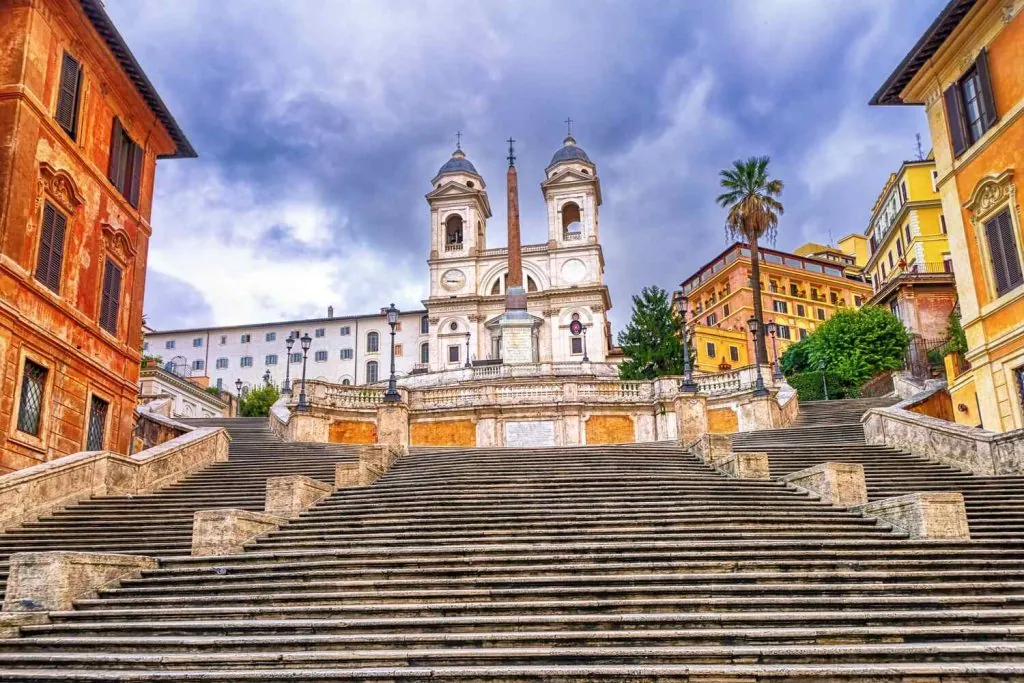
They are one of the most photographed spots in Rome. Their story is stranger than most visitors expect: a French diplomat paid for them, a Spanish embassy gave them their name, and it took more than 60 years of political arguing before anyone laid a stone. Below are the history, the famous moments, the step-count puzzle and the rules you need to know before you go.
Why Are They Called the Spanish Steps?
The name comes from the square at the bottom, Piazza di Spagna, which was itself named after the Spanish Embassy to the Holy See. The embassy has occupied Palazzo Monaldeschi on the piazza since the 17th century, and the neighbourhood around it was once treated as Spanish territory.
The irony is that almost everything else about the steps is French. The church at the top, Trinità dei Monti, was begun in 1494 under King Charles VIII of France for the French Minim friars and consecrated in 1594. The money for the staircase came from a French diplomat. Italians avoid the confusion by calling it the Scalinata di Trinità dei Monti, the staircase of Trinità dei Monti.
Who Built the Spanish Steps, and Why Did It Take So Long?
For centuries the slope between the piazza and the church was a muddy, tree-lined bank. The turning point was the will of Étienne Gueffier, a French diplomat in Rome, who died in 1660 and left money for a proper staircase. His nephew contested the will, and the bequest was cut roughly in half.
Then politics took over. Cardinal Mazarin, chief minister of France, wanted the staircase crowned by an equestrian statue of King Louis XIV. A French king towering over a Roman square was unthinkable for the popes, and the project stalled for decades.
It only moved again in 1717, when Pope Clement XI ordered a design competition. The young architect Francesco De Sanctis won it, although historians have long debated how much of the winning idea came from his rival Alessandro Specchi. Construction began in 1723 under Cardinal Pierre Guérin de Tencin. The steps were inaugurated by Pope Benedict XIII for the Jubilee Year of 1725. Some sources date the final touches to 1726.
Look closely at the balustrades and you will see the compromise carved in stone: the French fleur-de-lys sits alongside the eagle and crown of the papal family. Neither side got a king on a horse.
The Spanish Steps in a short timeline
| Year | What happened |
|---|---|
| 1494 | Construction of Trinità dei Monti begins under Charles VIII of France |
| 1627–1629 | Pietro Bernini builds the Barcaccia fountain at the foot of the slope |
| 1660 | French diplomat Étienne Gueffier dies, leaving money for a staircase |
| 1717 | Pope Clement XI launches the design competition; De Sanctis wins |
| 1723–1725 | The steps are built and opened for the 1725 Jubilee |
| 1821 | Poet John Keats dies in the house at the foot of the steps |
| 1953 | Roman Holiday makes the steps world-famous |
| 2015–2016 | Bulgari funds a €1.5 million restoration; the steps reopen on 23 September 2016 |
| 2019 | Rome bans sitting on the steps |
How Many Steps Are There?
The standard answer is 135 steps, arranged in a series of ramps and landings. You will find other numbers online, and none of them is a typo in the strict sense. They come from counting differently:
| Number | Where it comes from |
|---|---|
| 135 | The usual count of actual steps, from the piazza to the church terrace |
| 136 | Counting the raised drainage ledge at the very bottom as a step |
| 138 | Figure linked to the original 1717 design, repeated in restoration coverage |
| 132 | Rome's tourism office describes 11 ramps of 12 steps each |
If you want to settle it yourself, count on your way up. It is one of the few free experiments in Rome.
Why Are the Spanish Steps Famous?
The steps became famous for a mix of film, poetry, fashion and flowers.
Roman Holiday (1953). The image most people carry in their heads is Audrey Hepburn as Princess Ann, eating a gelato on the steps before Gregory Peck catches up with her. That one scene turned the staircase into a pilgrimage site for film fans. It also appears in The Talented Mr. Ripley (1999).
Keats and the Grand Tour. In the 18th and 19th centuries Piazza di Spagna was the meeting point of the Grand Tour, full of English artists and writers. The poet John Keats died of tuberculosis in a room overlooking the steps in February 1821. The house is now the Keats-Shelley House, a small museum dedicated to the Romantic poets.
Fashion. The square sits at the end of Via Condotti, Rome's most famous luxury shopping street, which we cover in where to shop in Rome. The steps were the stage for the televised fashion gala Donna sotto le stelle from the 1980s, and Valentino staged a couture show on them in July 2022.
Azaleas. Every spring, usually from mid-April to mid-May, the city lines the steps with around 450 pots of pink azaleas, a tradition dating back to the 1950s. If your dates are flexible, Rome in April is the time to catch them.
The Barcaccia fountain at the bottom
At the foot of the steps sits the Fontana della Barcaccia, the "ugly little boat". It was made by Pietro Bernini between about 1627 and 1629, possibly with help from his famous son, Gian Lorenzo. Popular legend says it remembers a boat left stranded in the square by the Tiber flood of 1598.
The more practical reason for the half-sunken design is water pressure. The fountain is fed by the ancient Acqua Vergine aqueduct, the same water that supplies the Trevi Fountain, and the pressure here is too low for a tall jet. Bernini solved that by sinking the boat below street level.
Can You Sit on the Spanish Steps?
No. Since July 2019, Rome's urban police regulations have treated the steps as a monument, and sitting or lying on them is banned. When the rule came in, the fine was reported as €250, rising to €400 if you dirty or damage the steps. Municipal police patrol the area, especially during the day.
| On the Spanish Steps you can… | You should not… |
|---|---|
| Walk up and down | Sit or lie on the steps |
| Stop briefly for photos | Eat or drink on the steps |
| Stand on the landings to enjoy the view | Drag wheeled suitcases or strollers down them |
| Sit on the edge of the piazza nearby | Climb into the Barcaccia fountain |
So the famous Roman Holiday gelato moment would earn you a fine today. The rules belong to a wider set of city regulations against damaging monuments, the same spirit behind many of the customs in our guide to what "When in Rome, do as the Romans do" means. The ANSA report on the 2019 ban has the original details.
Visiting the Spanish Steps: Practical Tips
- Cost and hours. Free, with no gates or tickets. The steps are open day and night; plans for a night-time fence were rejected after the 2016 restoration.
- Getting there. Metro Line A stops at **Spagna**, right next to the piazza. A second exit leads through long underground walkways towards Villa Borghese, handy if you want to skip the climb.
- Best time. Early morning is when you will have the steps almost to yourself. Late evening, when the lamps come on, is the most atmospheric.
- At the top. The terrace in front of Trinità dei Monti gives you a view straight down Via Condotti towards the domes of the historic centre. The church is usually open daily, with visits paused during services.
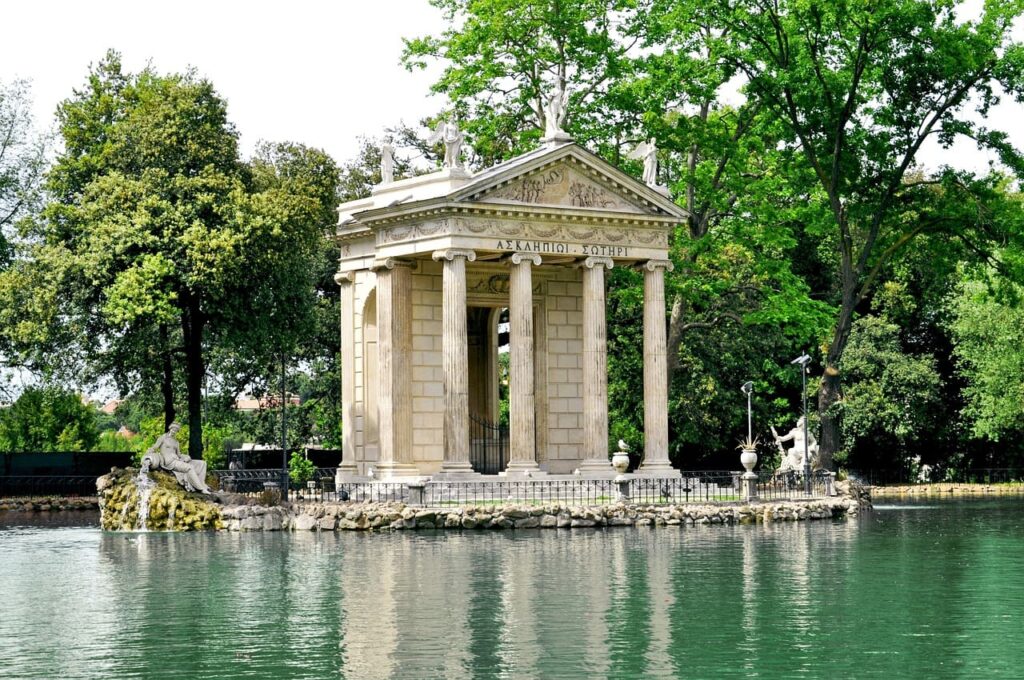
From the top, follow Viale della Trinità dei Monti to the Pincio terrace and the gardens of Villa Borghese. The walk is flat and shaded, and it gets you away from the crowds fast. Downhill, the Trevi Fountain is about a 10-minute walk, and Piazza del Popolo about the same in the other direction.
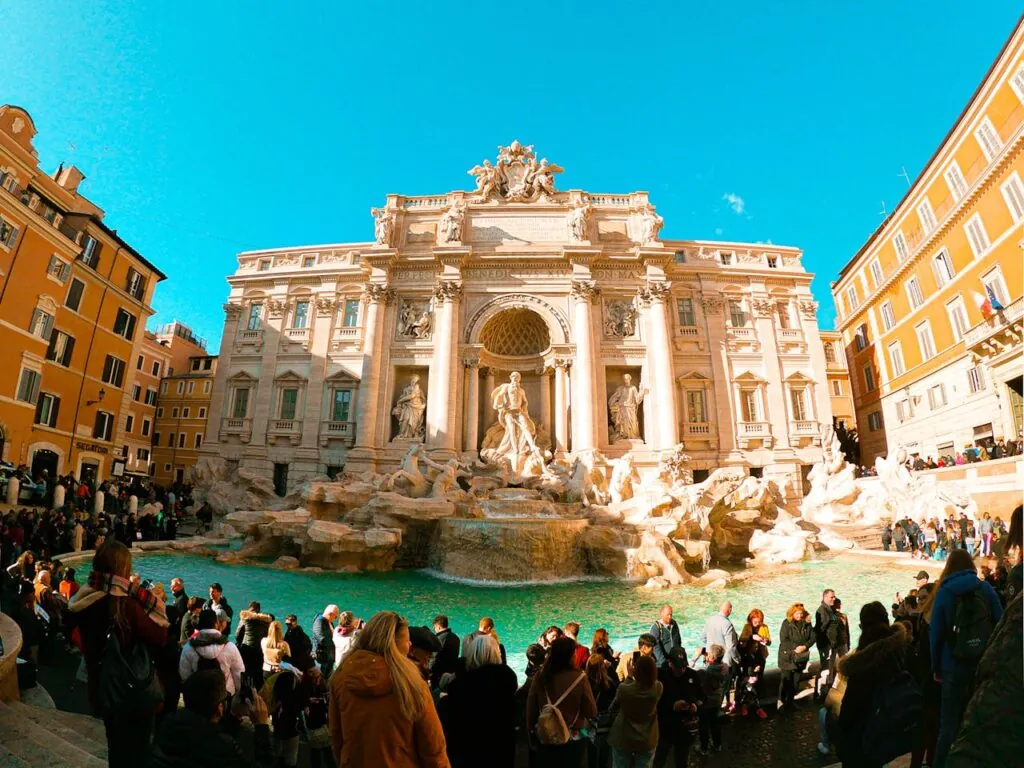
That makes the steps an easy stop on a classic walking loop with the Trevi Fountain and the Pantheon. For more ideas, see our list of the must-see sights in Rome, and read why the Trevi Fountain is so famous before you go. If you are in town for an evening, round off the day with a Colosseum night tour. The Spanish Steps are a fine first stop before you head to the arena after dark.
Frequently Asked Questions
Why are the Spanish Steps so famous?
Can you sit on the Spanish Steps?
Are the Spanish Steps free to visit?
Who built the Spanish Steps?
What is at the top of the Spanish Steps?

Founder of PortalWeb GmbH, a Swiss web agency, and a passionate traveler. Every fact on Colosseum at Night is checked against official sources and kept up to date.
Comments