 Colosseum at Night
 EN
EN DE
DE ES
ES FR
FR IT
IT"When in Rome, do as the Romans do" means that when you are in a new place, you should follow the customs of the people who live there. The saying goes back to the 380s AD, when St Ambrose, Bishop of Milan, advised that each local church's fasting custom should be followed. Today it is usually shortened to "when in Rome."
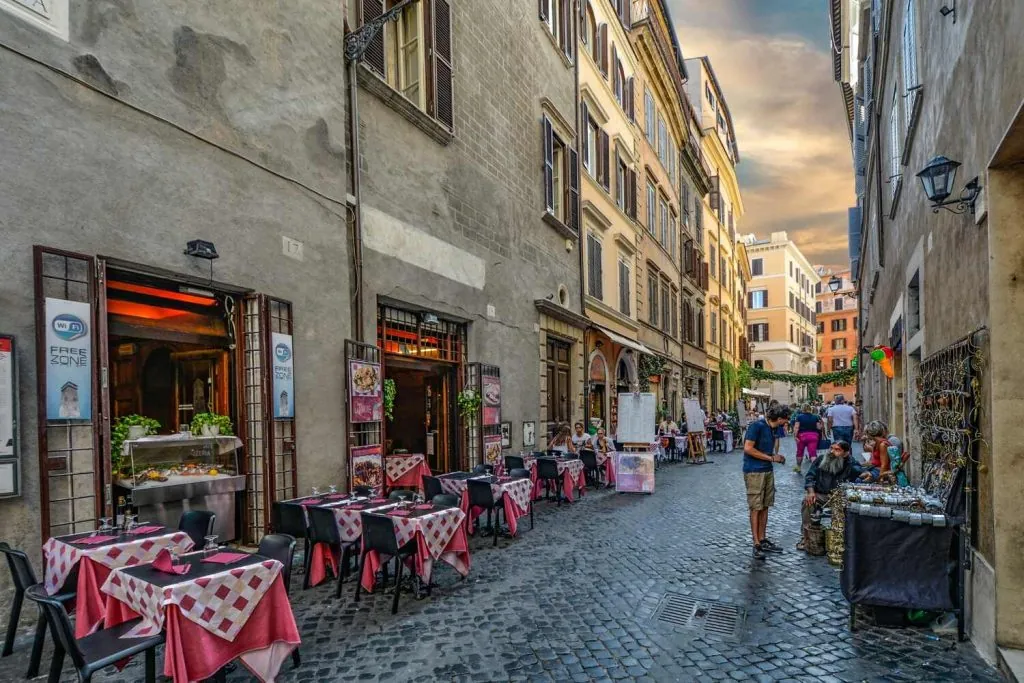
It is one of the best-known proverbs in English. Its origin is a little surprising: the famous advice was given in Milan, not Rome, and it was about fasting, not food or manners. Below you will find the meaning, the real story, the Latin version, the equivalents in other languages, and the Roman customs that are actually worth following when you visit in 2026.
What Does "When in Rome" Mean?
The phrase has two closely related meanings:
- When you visit another country or culture, adapt to local customs. Do not expect the place to adjust to you.
- In any unfamiliar situation, follow the lead of the people who know how things work, at a new job, a wedding in another family or a club with its own rules.
Dictionary.com sums up the first sense as following the customs of the people who live in the place you visit. The underlying idea is respect, with a dash of self-interest: fitting in makes your life easier.
In everyday English it is often used with a wink, as a cheerful excuse for indulging in something local. "A second gelato before dinner? When in Rome…" Used that way it is playful, never rude.
What Is the Full Saying?
The full proverb is "When in Rome, do as the Romans do." You will also hear:
- "When in Rome…". with the rest left unsaid, which is the most common modern form
- "Do as the Romans do". on its own
- "When in Rome, do as the Pope does". , a jokey 19th-century variant
The short form "When in Rome" was common enough by the 1930s to be used as the title of a stage play. It has since been the title of two films: a 2002 Mary-Kate and Ashley Olsen movie and a 2010 Disney romantic comedy with Kristen Bell. It is also the name of a British synth-pop band whose 1987 single "The Promise" became a US hit.
Where Does "When in Rome" Come From?
The saying goes back to two of the most important figures of early Christianity: St Ambrose, Bishop of Milan, and St Augustine of Hippo.
In the mid-380s Augustine was living in Milan, and his mother Monica had followed him there. She was confused: back home, and in Rome, Christians fasted on Saturdays, but the church in Milan did not. Which custom was right? Augustine put the question to Ambrose.
Augustine later recorded the bishop's answer in a letter to a man named Januarius (Letter 54, usually dated around AD 400). In the classic English translation, Ambrose replied:
"When I visit Rome, I fast on Saturday; when I am here, I do not fast."
Ambrose's point was that neither practice was wrong. The right thing was to follow the custom of the church you were in, to keep the peace. Augustine repeated the advice in an earlier letter to Casulanus (Letter 36, around AD 396), and both texts can be read in full on New Advent's edition of Augustine's letters. Monica died in 387, so the conversation must have taken place between about 385 and 387.
So the most famous line about Rome was spoken by a bishop in Milan, about a question of church calendars.
The Latin version
You will often see this rhyming Latin couplet:
Si fueris Romae, Romano vivito more; si fueris alibi, vivito sicut ibi.
It translates as "If you are in Rome, live in the Roman way; if you are elsewhere, live as they do there." It is frequently presented as Ambrose's own words, but it is not what he wrote. It is a later, polished version of his advice that circulated in medieval and early modern Europe; the English theologian Jeremy Taylor quoted it in 1660. If you want the Latin background, our guide to what language Rome spoke explains how Latin evolved into Italian.
How the saying reached English
| Date | Milestone |
|---|---|
| c. 385–387 | Ambrose gives his advice in Milan |
| c. 396 | Augustine records it in Letter 36 |
| c. 400 | Augustine tells the story again in Letter 54 |
| c. 1530 | The proverb appears in English, according to Dictionary.com |
| 1599 | Playwright Henry Porter: "when a man doth to Rome come, he must do as there is done" |
| 1621 | Robert Burton's Anatomy of Melancholy uses a similar form |
| 1660 | Jeremy Taylor quotes the Latin couplet |
| 1777 | The modern wording "do as the Romans do" appears in print |
"When in Rome" in Other Languages
Most European languages have their own version of the same idea:
| Language | Saying | Literal meaning |
|---|---|---|
| Italian | Paese che vai, usanza che trovi | "Country you go to, custom you find" |
| Spanish | Donde fueres, haz lo que vieres | "Wherever you go, do what you see" |
| French | À Rome, fais comme les Romains | "In Rome, do as the Romans" |
| German | Andere Länder, andere Sitten | "Other countries, other customs" |
| Latin | Si fueris Romae, Romano vivito more | "If you are in Rome, live the Roman way" |
Notice that the Italian version does not mention Rome at all. Romans themselves just say paese che vai, usanza che trovi.
How to Do as the Romans Do in 2026
Here is where the proverb becomes practical. Some Roman customs are just habits; others are city rules with fines attached. This checklist separates the two.
| Custom | Rule or habit? | What to know |
|---|---|---|
| Drink your coffee at the bar | Habit | Standing al banco is usually much cheaper than table service, and the two prices are legal |
| Cappuccino in the morning | Habit | Romans order milky coffee mainly before late morning; after lunch it is espresso |
| Eat late | Habit | Lunch is around 1 pm, dinner rarely before 8 pm |
| Check the bill for service | Habit | A bread and service charge may appear on the bill; tipping is optional, see how tipping works in Rome |
| Say hello properly | Habit | Buongiorno until early afternoon, buonasera after; more in how to say hello in Rome |
| Cover shoulders and knees in churches | Rule at the door | Staff at St Peter's and other churches can refuse entry; see what to wear in Rome |
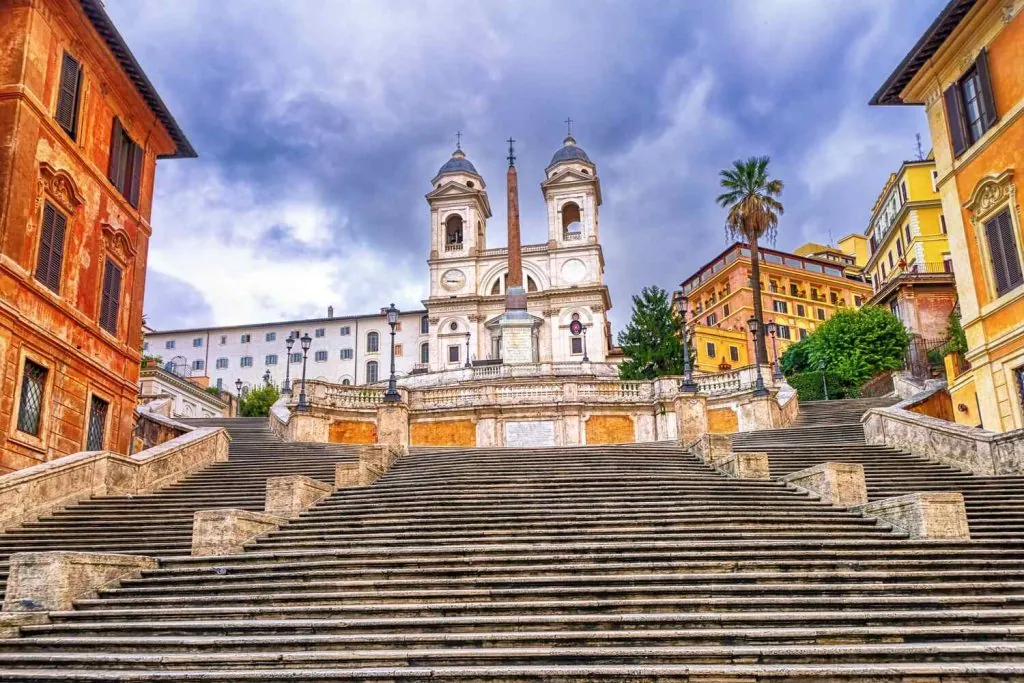
| Do not sit on the Spanish Steps | City rule | Banned since 2019, with fines; details in our Spanish Steps guide |
| Stay out of the fountains | City rule | Wading or bathing in historic fountains is banned and fined |
| Pay for the Trevi Fountain basin area | City rule | Since February 2026, entry to the area next to the water costs €2 (daily 9 am–10 pm); the square itself stays free, per Turismo Roma |
| Validate your bus ticket | City rule | A standard ATAC ticket costs €1.50 for 100 minutes (October 2026); validate it when you board, or tap a contactless card |
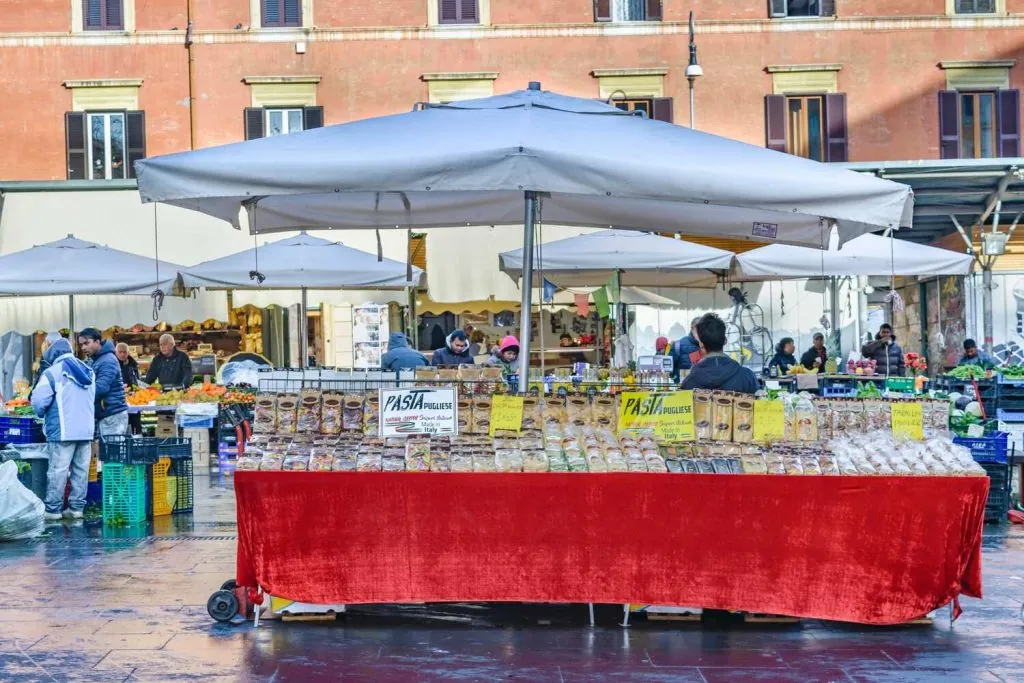
The habits will not get you fined, but they are the difference between feeling like a tourist and feeling at home. Shop at a neighbourhood market, order your espresso standing up, and sit down to dinner when the Romans do. Our guide to where to eat in Rome helps with the last part.
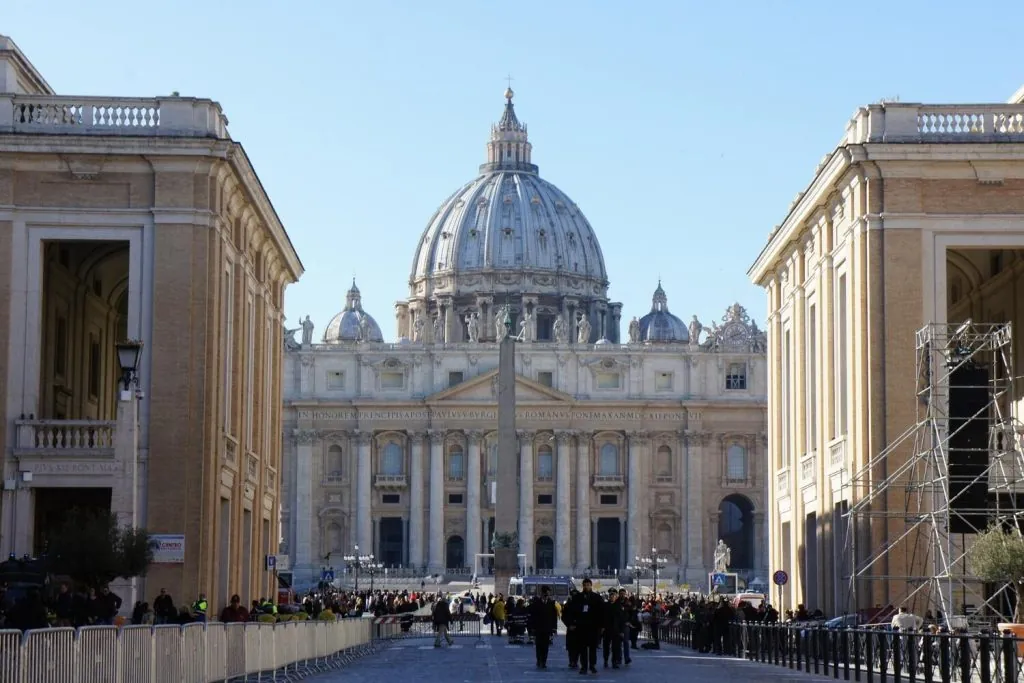
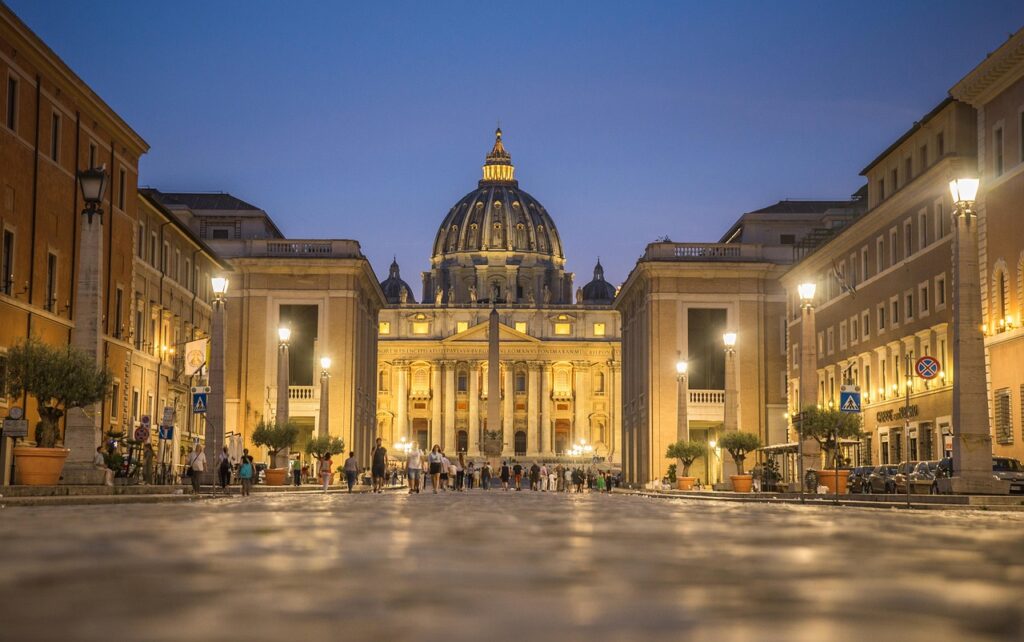
The rules matter most at the big sights. St Peter's Basilica checks for covered shoulders and knees, the Spanish Steps are patrolled, and the Trevi Fountain now has a ticketed area next to the water. If you would rather let someone local handle the details, a guided walk from our list of the best tours in Rome is the easiest way to do as the Romans do from day one.
Frequently Asked Questions
What does "when in Rome" mean?
Who said "When in Rome, do as the Romans do"?
Is "When in Rome, do as the Romans do" in the Bible?
What is the Italian version of "When in Rome"?
Is saying "when in Rome" rude?

Founder of PortalWeb GmbH, a Swiss web agency, and a passionate traveler. Every fact on Colosseum at Night is checked against official sources and kept up to date.

Comments