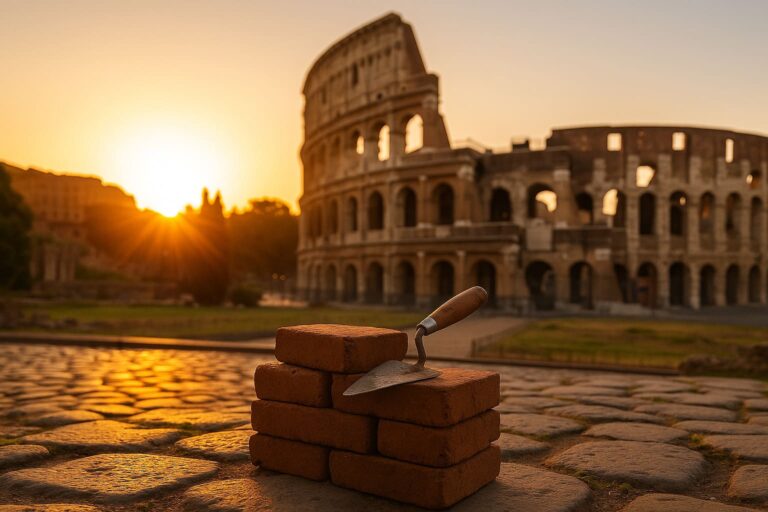
What does rome look like today: a simple, visual guide for first-time visitors
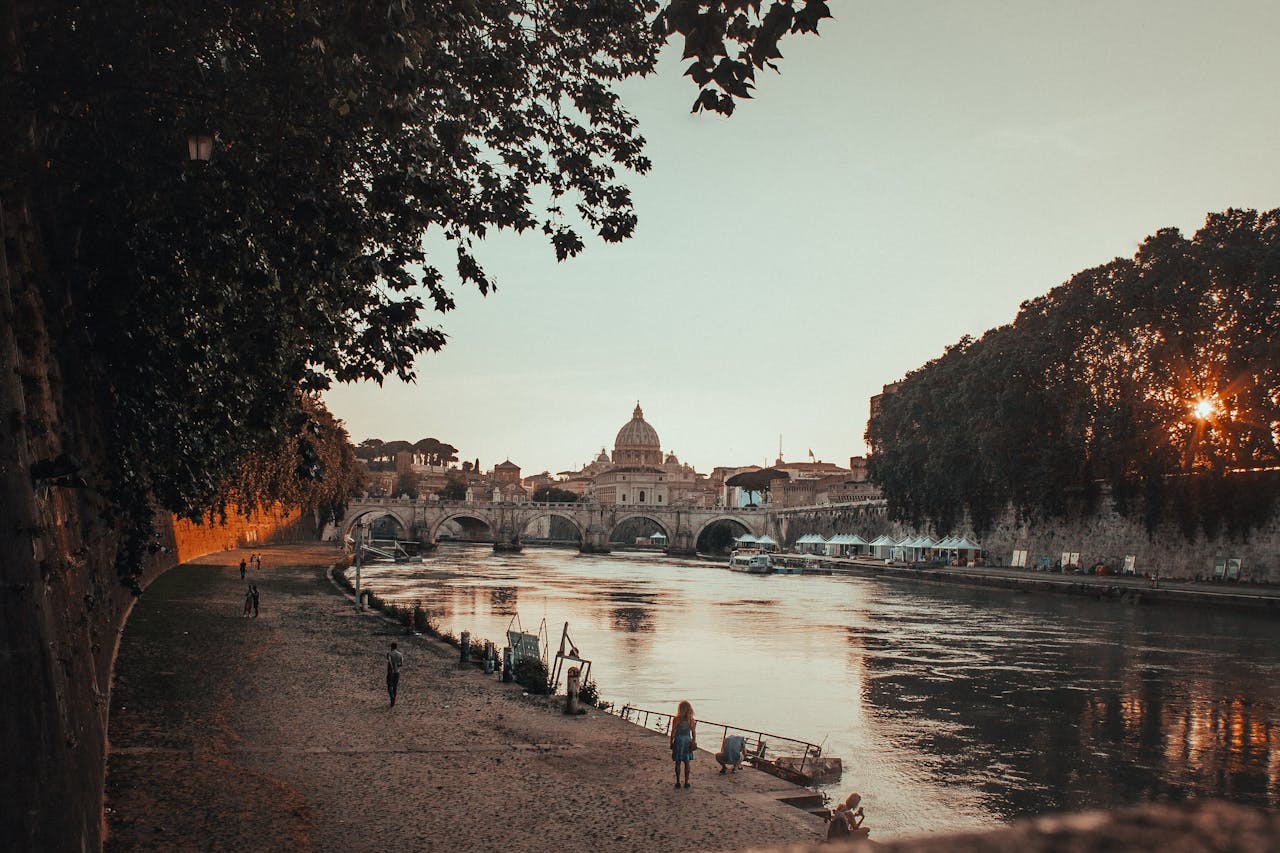
A quick picture: what does rome look like today?
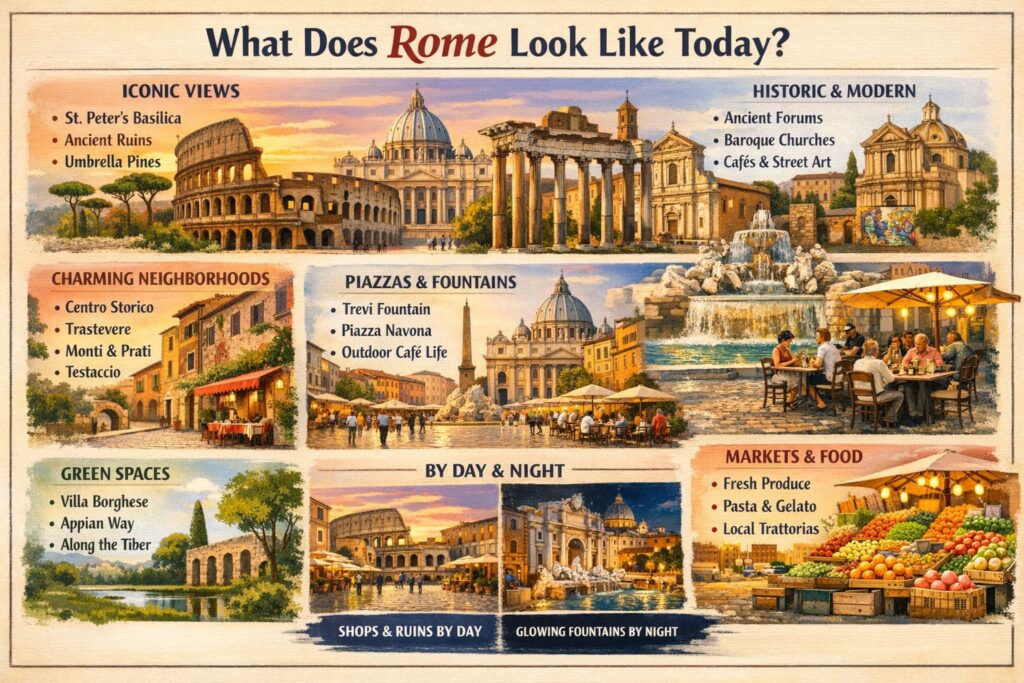
If you’re wondering what does Rome look like today, imagine a city where golden domes and marble ruins rise above narrow cobblestone streets, espresso bars spill onto sunny piazzas, and umbrella pines frame views of the Tiber. It’s at once ancient and modern: morning markets, lunchtime trattorias, sunset church bells, and glowing fountains at night. The historic center is compact and walkable; beyond it, districts feel more residential and creative. Much of what you see sits inside a UNESCO World Heritage area—Rome wears its 2,000+ years of history on the surface.
Time layered in stone: ancient, renaissance, baroque… and now
One reason travelers ask what does Rome look like today is because Rome is visually “layered.” You turn a corner and move across centuries in seconds:
- Ancient Rome: brick-and-travertine forums, arches, stadiums, baths.
- Renaissance & Baroque: theatrical churches, ornate piazzas, spiraling fountains.
- Modern Rome: broad boulevards, light-colored apartment blocks, street art corridors, sleek museums.
This blend is official: the Historic Centre of Rome (including sites under the Holy See’s jurisdiction in the city) is inscribed on the UNESCO list for its outstanding universal value—your daily walks cross a living museum.
Mini-takeaway: You don’t have to “hunt” for history. In Rome, history forms the streetscape itself.
The skyline: domes, pines, and pale travertine
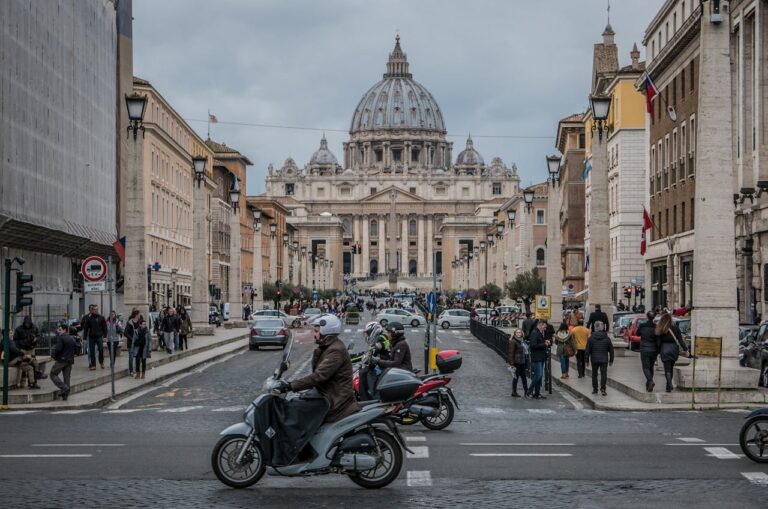
Ask locals what does Rome look like today from a distance and you’ll hear about domes and pines. From viewpoints like the Pincio Terrace or the Orange Garden, the city is a soft sea of cream-colored buildings pierced by cupolas—St. Peter’s Basilica is still the anchor—and dotted with distinctive umbrella pines. Monuments use travertine, a warm limestone that glows peach at sunset. Even the modern additions tend to keep a pale palette, so nothing screams “glass and steel.”
Neighborhoods at a glance (so you can picture the vibe)
Rome isn’t one look; it’s a set of moods. Here’s how the main areas feel:
- Centro Storico (Historic Center): tight lanes, Piazza Navona, Pantheon, boutiques, classic cafés. Evening light on stone is gorgeous.
- Trastevere: ivy, laundry lines, trattoria tables on cobbles, street music; a casual, bohemian look.
- Monti: vintage stores, small wine bars, locals chatting at corners; hip but low-rise.
- Prati (near the Vatican): wider streets, elegant 19th-century buildings, polished shopfronts.
- Testaccio & Ostiense: former industrial zones turned foodie and street-art hubs; bold murals on warehouse walls.
- Aventino & Celio: leafy residential pockets with ancient fragments nearby.
Pro tip: Choose your base by the look you love. If your mental image is narrow alleys and piazzas, stay in the Centro Storico or Trastevere. Prefer calmer, grid-like streets? Try Prati.
Streets and squares: fountains, cobbles, and café chairs
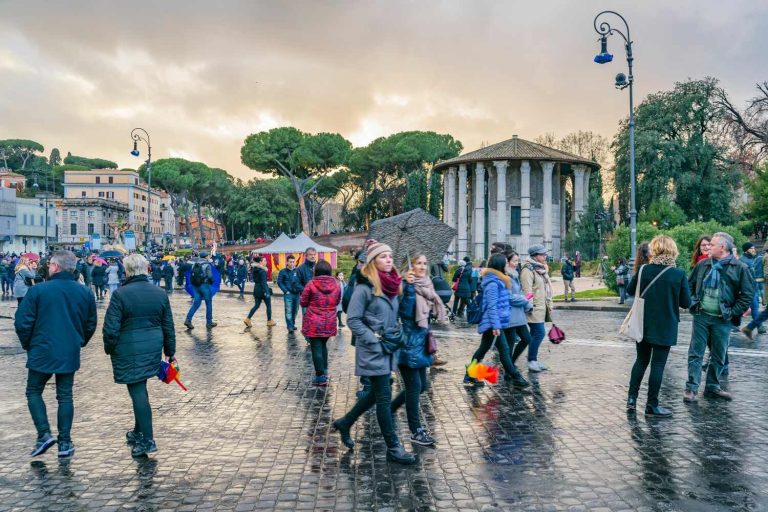
What does Rome’s street life look like today? Think piazzas as outdoor living rooms. You’ll see kids chasing pigeons, locals standing for espresso, and friends leaning on fountain rims. Surfaces vary: sampietrini (small dark cobbles) in older lanes, smoother paving on larger squares. Many fountains are not just pretty—some are historic artworks with carved figures and flowing aqueduct water, the most famous being the Trevi Fountain, which is part of the city’s baroque identity and a magnet for night-time crowds.
Green Rome: parks, villas, and the Tiber’s curves
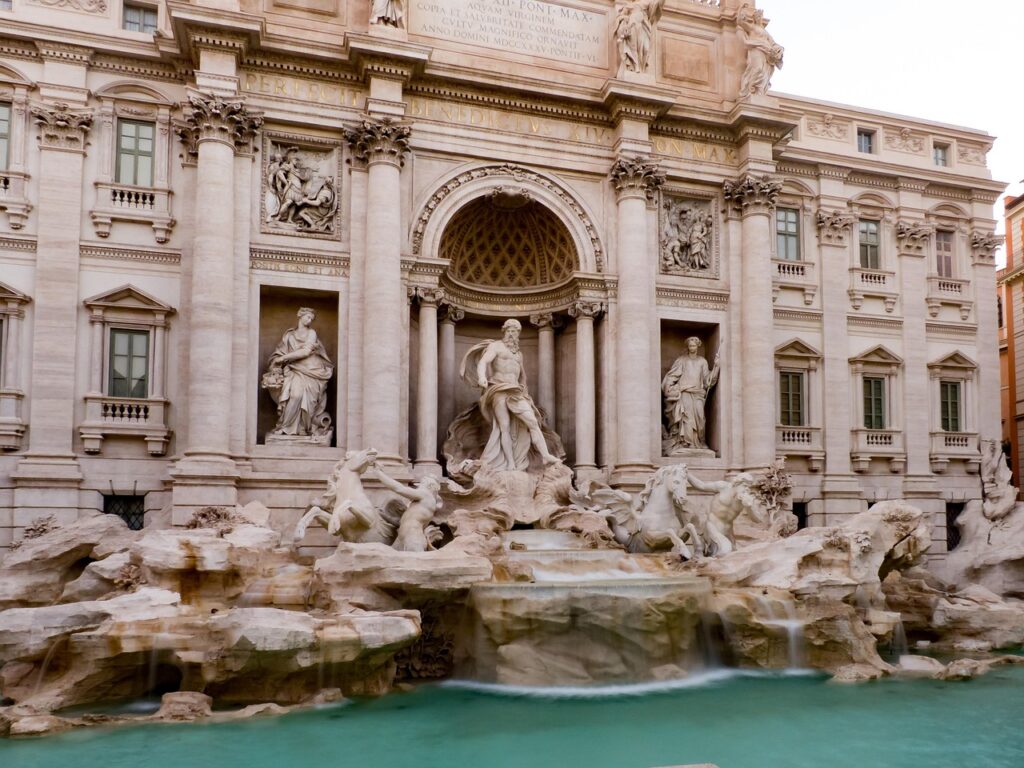
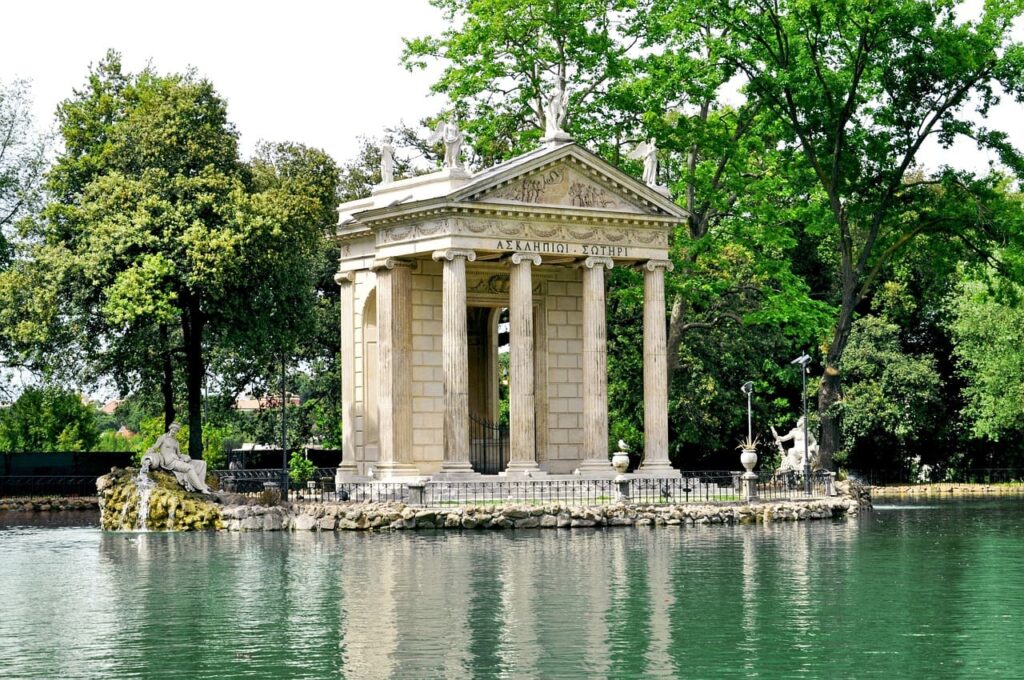
Another surprise when people ask what does Rome look like today: it’s very green. Rome is dotted with parks, villa gardens, and tree-lined avenues. Villa Borghese is a central “green lung” you can stroll to from the Spanish Steps; the Appia Antica area is a countryside-meets-city landscape of cypresses and ancient paving stones; along the Tiber, planes and poplars soften the urban edges. City guides even call Rome “one of the greenest cities in Europe,” a claim you’ll feel when you step from traffic into a cool, shaded garden.
Mini-takeaway: Bring walking shoes. Rome’s best viewpoints, parks, and riverside paths make the city feel open and breathable.
Churches and palaces: marble shells with art inside
From outside, many churches look simple: brick walls, a carved door, a bell tower. Step inside and you meet gold mosaics, painted ceilings, side chapels glowing with candles, and cool marble floors. The same goes for palazzi—modest façades hide frescoed staircases and quiet courtyards. Visually, Rome plays with contrast: plain exteriors, dramatic interiors.
Markets, food streets, and the everyday city
Daytime Rome has an “open-air pantry” vibe. Campo de’ Fiori stacks artichokes and citrus under awnings; Testaccio Market blends produce with street food counters; neighborhood bakeries show trays of pizza al taglio by the window. At lunch you’ll see bowls of cacio e pepe or carbonara at tiny tables; in the late afternoon, gelato becomes a moving color chart in people’s hands. The look is homely, not flashy—chalkboard menus, checked tablecloths, and a short pasta of the day list pinned to the door.
Getting around: how movement shapes the view
Even how you move through Rome changes how the city looks to you:
- On foot: short sightlines that suddenly open to a sunlit square.
- By bus or tram: quick snapshots of daily life—kids after school, nonni with shopping trolleys.
- By metro: brief dives underground, resurfacing near big sights; stations are plain compared to other capitals, but efficient for hops across town.
- On a scooter or bike: you’ll notice street textures—the cobbles, curb heights, and café corners—more intensely.
Seasons: Rome’s colors across the year
- Spring (Mar–May): wisteria drapes lanes in Trastevere; terrace tables return; soft light on stone.
- Summer (Jun–Aug): long golden evenings, piazzas buzzing late, some shops shuttered mid-August.
- Autumn (Sep–Nov): terracotta façades blend with foliage; markets overflow with mushrooms and grapes.
- Winter (Dec–Feb): clear blue skies, holiday lights, quieter museums; you see the architecture more sharply.
Night Rome: warm light and reflections
At night, what does Rome look like today becomes a warm film set: street lamps wash travertine with amber light, fountains glow from below, and domes puncture the dark. You’ll feel safe in the busy center; stick to lit streets, keep valuables close (as in any major city), and keep walking—Rome rewards motion after sunset.
“Picture this” itineraries (to help you visualize)
- 24 hours: dawn at the Pantheon, espresso at the counter, stroll to Piazza Navona, lunch near the Jewish Ghetto, sunset on the Tiber, Trevi Fountain after dinner.
- 48 hours: add the Colosseum/Forum zone in the morning, then cross to Trastevere for ivy-lined alleys and a mellow evening.
- 3–4 days: layer on a garden day—Villa Borghese or Appia Antica—and a Vatican morning for grandeur and mosaic sparkle.
Short story: your first five minutes
You step out near Piazza di Pietra. A stone wall across the street… no, a line of ancient columns fused into a palazzo. A vespa hums past. Someone in a suit sips espresso at a tiny outdoor table; a kid dribbles a soccer ball by a fountain. Two turns later, you’re in a tight lane where laundry hangs above a wine bar. Look up—there’s a painted ceiling peeking through a doorway. That’s the daily magic of what Rome looks like today: familiar life staged inside history.
FAQ
Is Rome mostly ruins or a modern city?
Both. The historic centre is dense with ancient and baroque monuments (it’s UNESCO-listed), but much of today’s Rome is a lived-in, modern capital with residential districts, parks, and contemporary culture layered around it.
Does Rome have many parks and green areas?
Yes. Guides describe Rome as one of Europe’s greenest cities, with major parks like Villa Borghese and the open landscapes of Appia Antica close to the center—easy escapes from stone streets.
Where will I feel the classic “movie Rome” vibe?
In the Centro Storico, around Piazza Navona, the Pantheon, Trevi Fountain, and across the river in Trastevere. Fountains, soft lighting, and lively piazzas define the look.
Wrap-up: a snippet-ready answer
What does Rome look like today? A walkable city of layers—ancient forums and baroque fountains set among lively piazzas, leafy parks, and low-rise neighborhoods with café life on every corner. The UNESCO-listed historic centre guarantees that art and history are part of the daily view, while green spaces and riverside paths keep things relaxed. Expect domes, pines, travertine, and people enjoying the street—day and night.