
On this page · 8 sections
- The Legend: Romulus, Remus and a Very Bad Argument
- Why Exactly 753 BC?
- The Evidence: What Archaeologists Actually Found
- From Founding to Kingdom: What Happened Next
- Founded in a Day? Built in a Day?
- Rome Still Throws Itself a Birthday Party
- What Language Did Those First Romans Speak?
- Frequently Asked Questions
Rome was founded on 21 April 753 BC — according to Roman tradition. That's the date ancient scholars like Varro calculated and the city still celebrates as its birthday. Archaeology tells a subtler story: permanent settlements stood on the Palatine Hill by around 1000 BC and merged into one organised city during the 8th century BC.
So both answers are true. There's the legend Rome told about itself, and the slower reality in the soil — and remarkably, they point at the same hill and roughly the same century. Here's how they fit together.
The Legend: Romulus, Remus and a Very Bad Argument
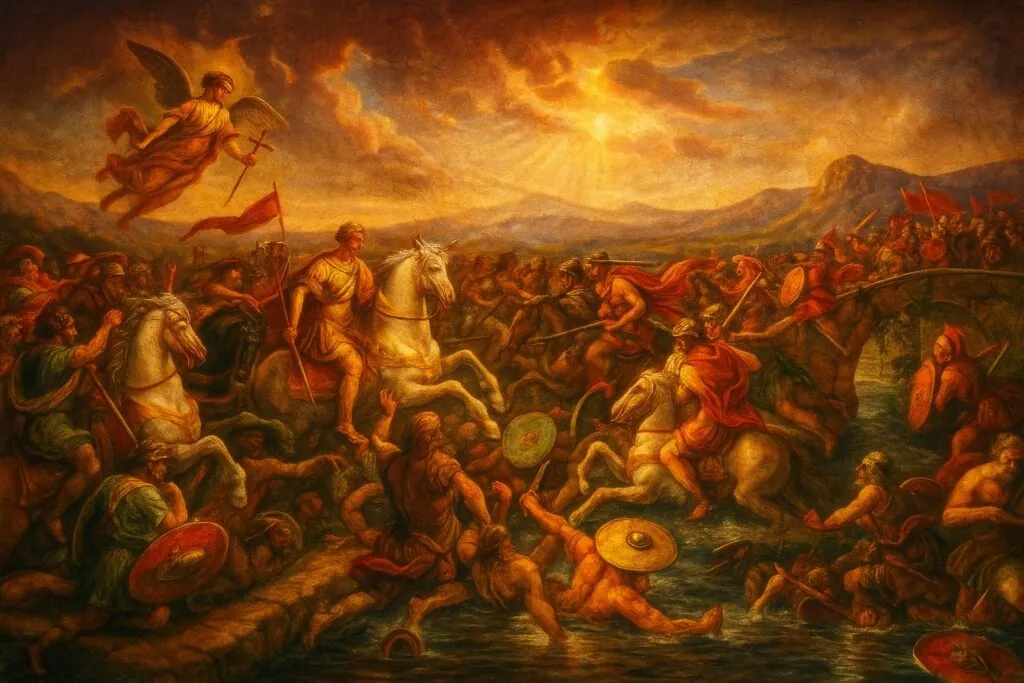
The famous version: twin brothers Romulus and Remus, sons of the war god Mars and the priestess Rhea Silvia, are condemned to death as infants, set adrift on the Tiber, washed ashore below the Palatine and nursed by a she-wolf in the Lupercal cave. Raised by a shepherd, they grow up to found a city of their own — then argue over which hill deserves it. Romulus picks the Palatine and starts ploughing a boundary furrow; Remus mocks the half-built wall by jumping over it; Romulus kills him on the spot. The city takes its founder's name: Roma.
Brutal? Very — and the Romans kept the fratricide in the story on purpose. A city born from a wall taken seriously was a city that would always take its walls seriously.
There's a prequel, too: the poet Virgil tied the family tree back to Aeneas, a prince who escaped burning Troy, giving Rome a pedigree as old as Greek legend itself. Romulus, in this telling, was Aeneas's distant descendant — mythological paperwork connecting Rome to the heroic age.
Why Exactly 753 BC?
Because a scholar did the maths. In the first century BC, the antiquarian Marcus Terentius Varro worked backwards through king-lists and consul-lists and fixed the founding at what we now call 21 April 753 BC. Romans dated everything from that moment — ab urbe condita, "from the founding of the city." The date is a reconstruction, not a birth certificate, but it stuck for two thousand years.
The Evidence: What Archaeologists Actually Found
| Period | Finding | What it means |
|---|---|---|
| ~1000 BC | Hut foundations and post-holes on the Palatine | People lived here centuries before "753" |
| 8th century BC | A fortification wall at the Palatine's foot | A defended community — a real founding act |
| 8th century BC | Burials and huts on surrounding hills | Several villages growing side by side |
| 7th century BC | The Forum valley is drained and paved | The villages merge into one organised city |
| 6th century BC | Monumental temples (Jupiter Optimus Maximus) | Rome is now a genuine urban power |
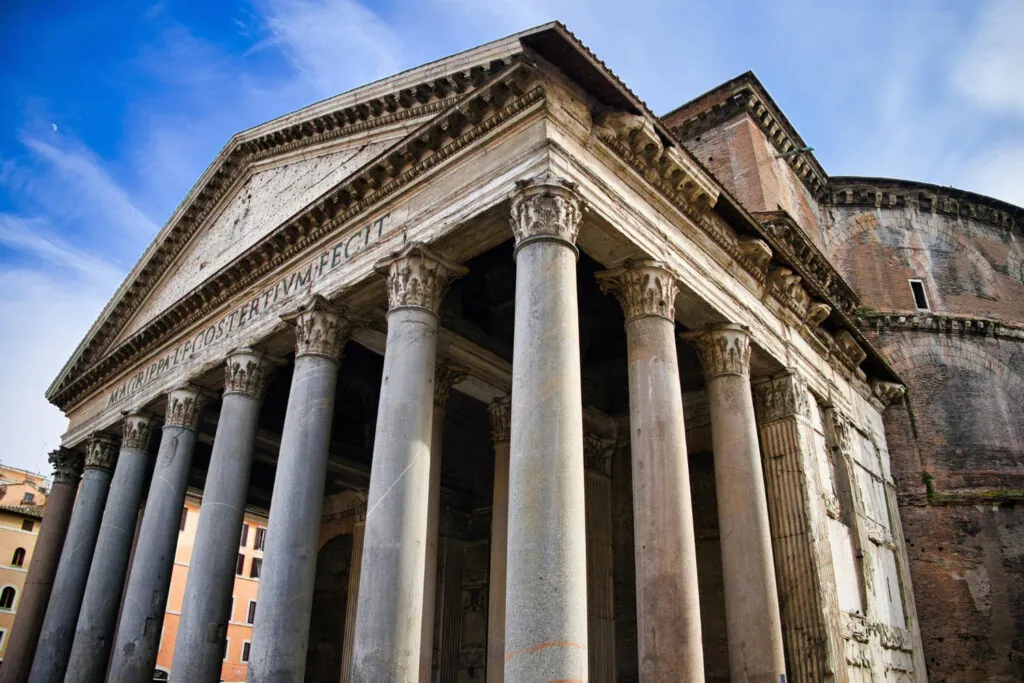
The remarkable part: in the 1980s, excavators found an 8th-century defensive wall at the base of the Palatine — right where legend places Romulus's wall, and within decades of Varro's date. Myth and stratigraphy almost never agree in ancient history; here they nearly shake hands. You can review the site's own summary of the hill's earliest phases at the official Parco archeologico del Colosseo, which manages the Palatine today.
From Founding to Kingdom: What Happened Next
Tradition gives early Rome seven kings, starting with Romulus and ending with Tarquin the Proud, expelled in 509 BC when Rome became a republic. Between them, the kings get credit for the first institutions: the Senate, the earliest temples, the Cloaca Maxima drain that made the Forum valley habitable. How much of that is history and how much backfilled legend is still argued — but the 250-year kingdom bridges the gap between a hilltop village and the republic that would conquer the Mediterranean.
Founded in a Day? Built in a Day?
Neither. The founding was a process spanning two centuries — which is exactly why the proverb explored in Was Rome built in a day? exists, and why building Rome took considerably longer than any single lifetime.
Visit the Palatine today and you can stand over those Iron-Age hut foundations, ten minutes' walk from the Colosseum — 2,800 years of the same city layered like a cake. It's the spot where Rome's claim to be the Eternal City stops feeling like marketing.
Rome Still Throws Itself a Birthday Party
Every 21 April the city celebrates Natale di Roma: historical re-enactors in legionary armour parade from the Circus Maximus past the Forum, there are gladiator displays, trench-digging ceremonies echoing Romulus's furrow, and fireworks over the Tiber. If your trip lands in late April, it's one of the best free spectacles in the calendar.
What Language Did Those First Romans Speak?
Early Latin — though their neighbours spoke Etruscan and Greek, and both left fingerprints on the young city, from temple design to the alphabet itself. The full story is in what language did Rome speak.
Frequently Asked Questions
What is the exact date Rome was founded?
Who founded Rome?
How old is Rome today?
Is Rome older than ancient Greece?
Sources
- official Parco archeologico del Colosseo · parcocolosseo.it
Sources linked in this article · Last updated: 31 Jul 2026

Founder of PortalWeb GmbH, a Swiss web agency, and a passionate traveler. Every fact on Colosseum at Night is checked against official sources and kept up to date.
Comments