
On this page · 7 sections
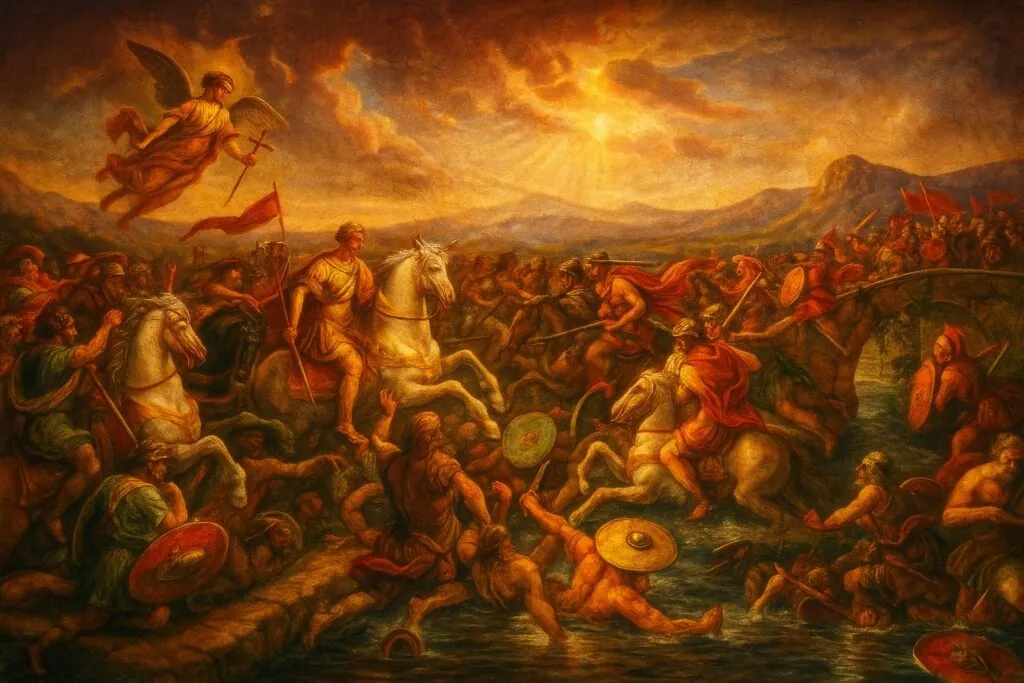
Rome fell for a combination of reasons, not one: decades of civil war, an economy wrecked by inflation and over-taxation, an overstretched frontier, devastating plagues, and finally sustained Germanic invasions. The Western Roman Empire ended on 4 September 476 AD, when the general Odoacer deposed the last emperor, Romulus Augustulus.
That short answer hides five centuries of drama. Below is the honest version historians actually agree on — what weakened Rome, what finished it, which popular explanations are myths, and why "the fall" looked completely different depending on where you stood.
The Short Timeline of the Fall
| Year | Event | Why it mattered |
|---|---|---|
| 235–284 AD | Crisis of the Third Century | ~26 emperors in 49 years; civil war becomes the norm |
| 285 AD | Diocletian splits the administration | East and West begin drifting apart |
| 376 AD | Goths cross the Danube as refugees | Mismanaged, they rise in revolt within two years |
| 378 AD | Battle of Adrianople | Emperor Valens and a Roman field army are destroyed |
| 406 AD | The Rhine frontier collapses | Vandals, Alans and Suebi pour into Gaul unopposed |
| 410 AD | Visigoths sack Rome | First sack in 800 years — a psychological earthquake |
| 439 AD | Vandals take Carthage | Rome loses Africa, its grain and its tax base |
| 455 AD | Vandals sack Rome | The state can no longer protect its own capital |
| 476 AD | Odoacer deposes Romulus Augustulus | Conventional end of the Western Empire |
What Actually Caused the Fall?
1. Endless civil wars
Rome's biggest enemy was Rome. During the Crisis of the Third Century the empire chewed through roughly twenty-six emperors in five decades, most of them murdered by their own troops. Every usurper marched his best frontier legions inward to fight other Romans, and every victory bought a few years before the next general tried his luck. The habit never fully stopped: even in the empire's final decades, western armies spent as much energy on coups as on defence.
2. An economy running on fumes
Emperors paid those armies by debasing the silver denarius until it contained almost no silver at all — under 5 % by the late third century, down from over 90 % under Augustus. Prices exploded; Diocletian's famous Edict on Maximum Prices (301 AD) tried to cap them and failed within years. Trade shrank back toward barter in some regions, and the tax burden crushed exactly the class of small farmers who had once filled the legions.
3. A frontier too long to hold
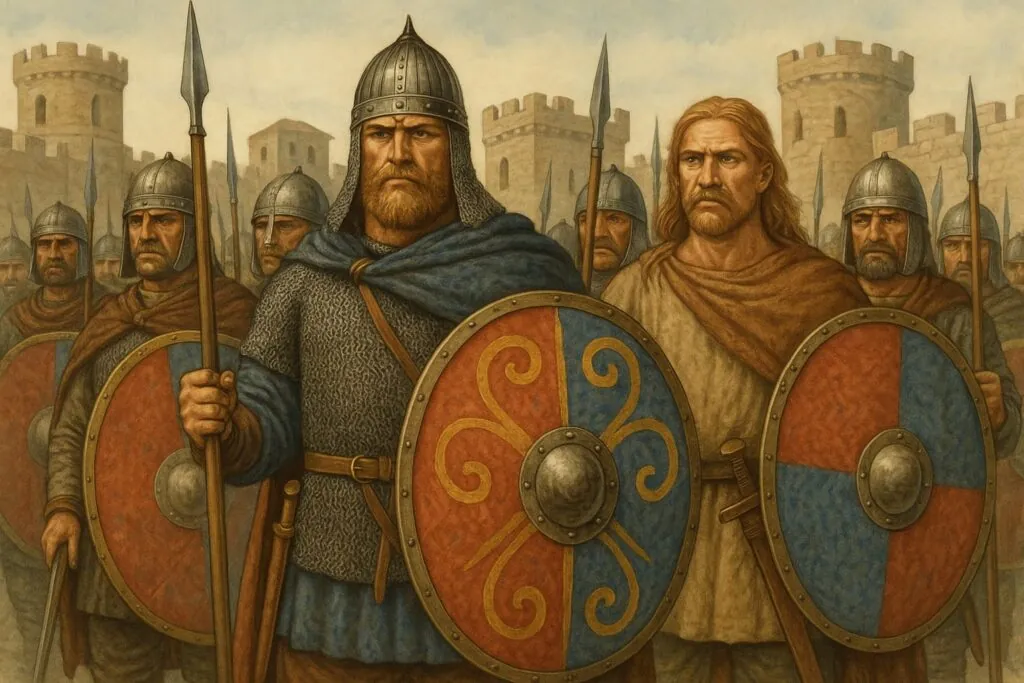
The empire defended roughly 8,000 kilometres of border with an army that late-Roman sources put around 400,000 men on paper — far fewer in reality, and increasingly recruited from the very peoples it faced. The Goths, Vandals and Franks were not mindless "barbarians": most were displaced farmers and warriors pushed west by the Huns, asking to settle inside an empire too weak to either absorb them properly or keep them out.
4. Plague and shrinking manpower
Two pandemics — the Antonine Plague from 165 AD and the Plague of Cyprian from 249 AD — killed millions across the Mediterranean, thinning taxpayers and recruits generations before the final collapse. A smaller population meant abandoned farmland, lower tax yields and emptier recruiting grounds, a spiral the empire never escaped.
5. The Hun domino effect
The trigger for the endgame came from the steppe. When the Huns crashed into eastern Europe around 370 AD, they knocked the Goths into the empire, and the Goths knocked over everything else. Attila's own invasions in the 440s–450s were survivable; the refugee crisis he set off two generations earlier was not.
6. The split that saved the East
When Diocletian and his successors divided the empire's administration, the wealthier, more urban East — ruled from Constantinople behind unbreachable walls — could bribe, tax and fight its way out of trouble. The poorer, more exposed West could not. Same empire, two fates.
The Myths That Won't Die
Lead poisoning? Romans did use lead pipes and sweetened wine in lead pots, but modern analysis shows exposure levels far too low to topple an empire — and the East used the same plumbing for another thousand years.
Moral decadence? The orgy-and-vomitorium picture comes mostly from moralising Roman authors and Hollywood. The fifth-century West was, if anything, more Christian and more austere than the empire at its peak.
Christianity? Edward Gibbon's famous thesis blamed the new religion for sapping civic spirit. Few historians accept it today — the deeply Christian Eastern Empire proved perfectly capable of surviving until 1453.
So When *Did* Rome Fall?
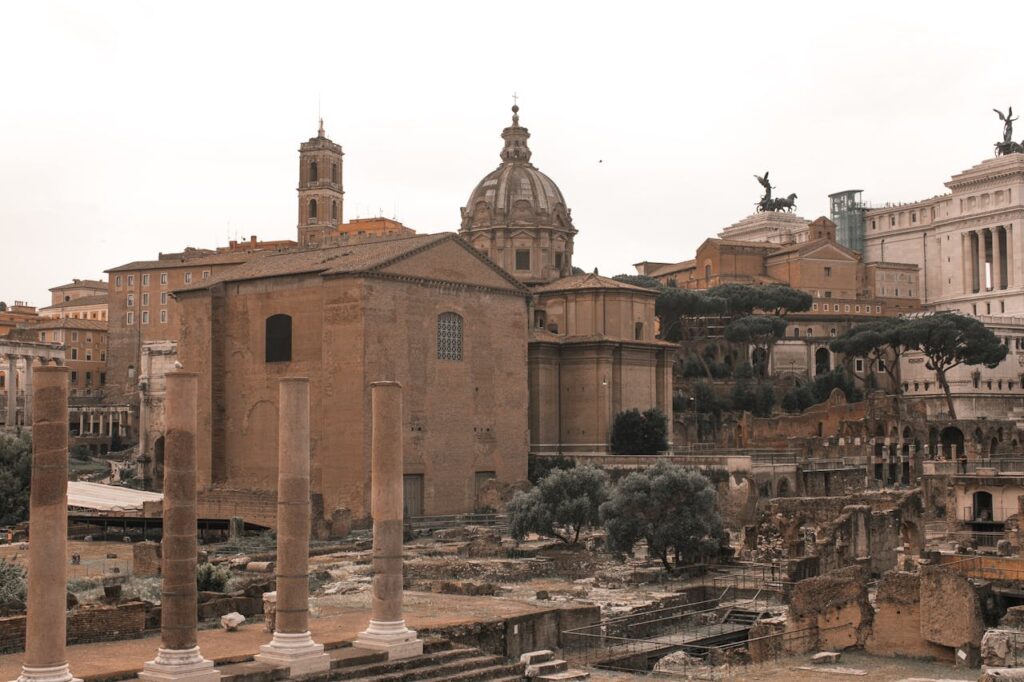
Pick your ending. 476 AD is the textbook date for the Western Empire. But the Eastern Roman (Byzantine) Empire continued for almost a thousand years, until Constantinople fell to the Ottomans in 1453. And the city of Rome itself never disappeared — it shrank from perhaps a million inhabitants at its peak to a few tens of thousands living among the ruins of the Colosseum and the Roman Forum, quarrying yesterday's monuments for building stone.
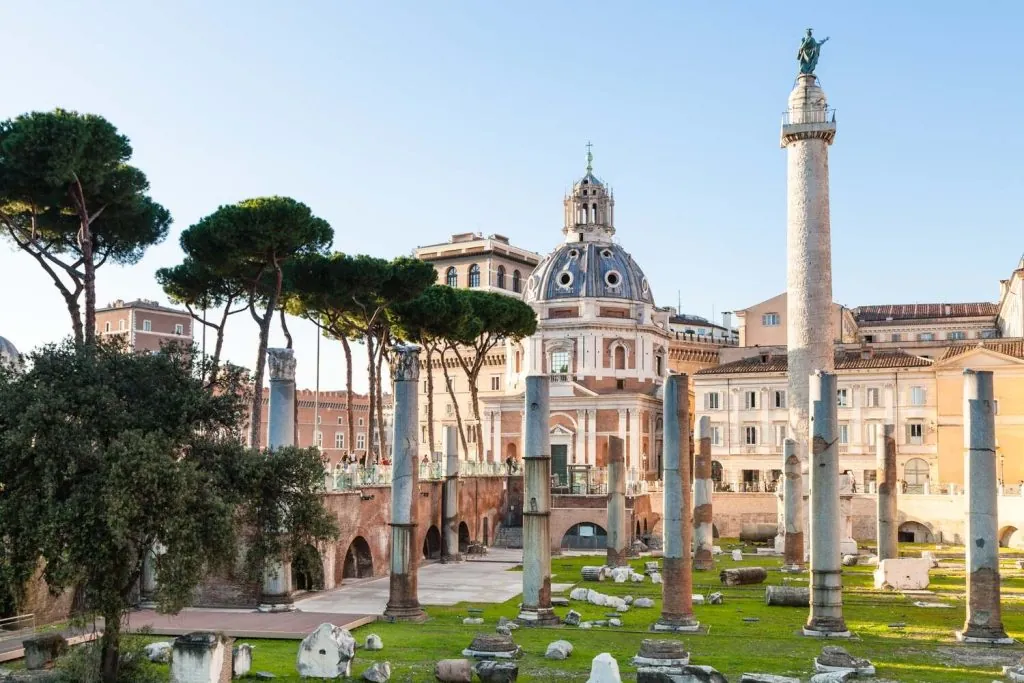
Standing on the Forum's original paving stones today, that's the detail that gets me every time: nobody who watched the last emperor abdicate thought of it as "the fall of Rome." Life, messily, went on — a story we trace in how the fall reshaped Western Europe.
What Survived the Fall
More than you'd think. Roman law resurfaced as the foundation of most European legal systems; Latin evolved into Italian, Spanish, French, Portuguese and Romanian; the Church kept Roman administration, literacy and even the title Pontifex Maximus alive; and Roman roads carried medieval pilgrims for centuries — a legacy we explore in why Rome is still called the Eternal City. Historians today often prefer the word transformation to fall, and the deeper background is well summarised in the Encyclopaedia Britannica's overview of the Western Empire's end.
Did Rome Fall in a Day?
No — and it wasn't built in one either, as we've covered before. The decline took roughly two centuries from the Crisis of the Third Century to 476 AD. If seeing the evidence in person appeals to you, the ruins tell this story better than any book — especially the Colosseum after dark, when the crowds are gone and the sheer scale of what was lost finally sinks in.
Frequently Asked Questions
What was the main reason Rome fell?
Who defeated the Roman Empire?
How long did the fall of Rome take?
Did people at the time know Rome had fallen?
Sources
- Encyclopaedia Britannica's overview of the Western Empire's end · britannica.com
Sources linked in this article · Last updated: 31 Jul 2026

Founder of PortalWeb GmbH, a Swiss web agency, and a passionate traveler. Every fact on Colosseum at Night is checked against official sources and kept up to date.
Comments